





No single standard covers every aspect of electrical and thermal management in a data center. Frequently cited documents have distinct roles: ASHRAE addresses temperature and humidity conditions and equipment environmental ratings; Uptime Institute addresses facility classification and operational management practices; IEEE addresses technical approaches to continuous thermal monitoring of switchgear.
When applying these documents to site procedures, first distinguish guidance on IT equipment inlet conditions from guidance on power distribution equipment. Their rating criteria are different.
What Does Each Document Cover?
| Document | Publisher | Scope | Level of electrical or thermal management guidance |
|---|---|---|---|
| Thermal Guidelines for Data Processing Environments (Fifth Edition) | ASHRAE TC9.9 | Temperature and humidity classes for IT equipment spaces (Classes A1–A4) | Based on IT equipment inlet conditions; power distribution equipment is not its primary focus |
| Data Center Power Equipment Thermal Guidelines and Best Practices (2016 white paper; free download) | ASHRAE TC9.9 | Power equipment environmental ratings, compatibility with IT equipment, design and monitoring | Specific design and measurement recommendations for power equipment |
| Tier Standard: Topology | Uptime Institute | Infrastructure topology classification (Tiers I–IV) and performance confirmation criteria | Classification and confirmation criteria, rather than an equipment inspection checklist |
| Tier Standard: Operational Sustainability | Uptime Institute | Management practices and risks affecting long-term performance beyond Tier classification | Management-level requirements; full text limited to members or subscribers |
| M&O Stamp of Approval assessment framework | Uptime Institute | Assessment of operational performance and staffing | Includes personnel management, maintenance, facility management and optimization, and health, safety and security |
| IEEE Std 2969-2025 | IEEE | Continuous thermal monitoring of switchgear and motor control centers up to 52 kV | Guidance on measurement points, installation, commissioning, alarms and records; distinguishes shall, should and may |
IEEE 2969-2025: Using Connection Temperatures and Trends to Support Maintenance Decisions
IEEE 2969-2025 directly addresses continuous thermal monitoring (CTM) of switchgear and motor control centers (MCCs) up to 52 kV. Its purpose extends beyond adding instruments: it describes how changes in critical connection temperatures can provide data for inspections, alarms and maintenance planning.
- Monitor heating associated with connection deterioration: Sections 4.2 and 7.2 explain that loose or corroded connections can develop temperature rises. Measurement locations can include cable terminals, busbar joints and breaker connections. Selection depends on equipment structure and criticality; sensors are not required at every location.
- Fill the gaps between periodic thermographic inspections: Section 1.2 states that CTM can supplement or replace traditional periodic infrared thermographic surveys. This concerns thermal inspections within the applicable equipment and monitoring scope, not the cancellation of all inspections, outage checks or equipment maintenance.
- Use trends to plan maintenance: Sections 7.4–7.5 describe incorporating ongoing temperature data, events and historical records into a maintenance program. Comparing changes at the same location under similar operating conditions helps determine whether further inspection is warranted, rather than waiting for an overtemperature alarm.
- Set alarms according to equipment conditions: Section 5.7 discusses absolute temperatures, temperature differences, alerts and alarms. Settings should consider allowable equipment temperatures, materials, insulation, loading and measurement locations. A single threshold should not be applied indiscriminately across equipment or phases, and temperature alone cannot identify a fault's root cause.
- Turn readings into traceable maintenance records: Section 6.5 recommends verifying sensor operation and identification and retaining commissioning results. Section 7.4.1 lists record fields including equipment location, measurement points, timestamps, alarm events, other measurements and responsible personnel. Deployment planning should also establish who reviews data and how findings are addressed and checked again.
Sensing technology must also suit long-term operation. Section 5.8 highlights sensor stability, loose mounting, calibration and maintenance of powered components. Annex A.3.1.6 describes passive RFID as one technology option and notes that antenna and sensor positions affect reading performance. These considerations inform system selection; they do not prescribe RFID or establish any brand's product performance.
This summary is based on the full text of IEEE 2969-2025. Recommendations, permissions and requirements must be interpreted according to the wording of each provision. The IEEE standards page provides the public entry point; the full document requires purchase or authorized access.
What Does FM Recommend for Critical Terminations and Locations That Are Difficult to Inspect Thermographically?
Section 2.3.7.2 of FM Data Sheet 5-19, Switchgear and Circuit Breakers (2020; interim revision October 2024), recommends online thermal sensors for critical terminations in critical switchgear and circuit breakers. Section 2.1.3.2 identifies thermographic viewing ports or permanently installed temperature monitoring devices as options where equipment design makes thermographic surveys difficult. Viewing ports should cover connections where problems are likely to occur.
Section 3.2.2 describes continuous monitoring options including fixed thermal cameras and non-conductive temperature sensors transmitting data through wired or wireless connections. This directly informs when to consider fixed monitoring and which methods are available. It is loss prevention guidance, not a purchasing requirement for a particular brand or communications technology.
What Should Be Confirmed When Selecting a Temperature Measurement Method?
Section 5.3 of IEEE 2969-2025 distinguishes contact and non-contact sensing and covers wired, wireless and fiber-optic connections. Select the method according to the measurement point and equipment conditions, rather than comparing only whether sensors are battery-free.
- Infrared thermography: Confirm an observable line of sight to the target surface. Suitable thermographic viewing ports can be considered for internal locations. Fixed thermography is a continuous monitoring option; periodic handheld imaging records only the conditions at the time.
- Contact sensing: Follow Section 5.3 when assessing attachment methods, heat transfer and electrical clearances. Measurement location and installation affect readings, so the sensing element's nominal accuracy is not the only consideration.
- Wireless, fiber-optic and other configurations: Assess power, signal, insulation, environmental and maintenance requirements using Sections 5.3–5.6 and Annex A. Passive RFID is one option; actual reading conditions and product specifications depend on the equipment configuration and manufacturer information.
- Number and location of measurement points: Section 5.3.1 highlights the need to understand equipment design and application conditions, including field connections, moving contacts, susceptibility to deterioration, expected load and maintenance access. More points are not necessarily more appropriate.
ASHRAE: Distinguishing Ambient and Connection Temperature Criteria
Classes A1–A4 in the ASHRAE Thermal Guidelines are based on IT equipment inlet air conditions. The power equipment white paper addresses environmental ratings and conductor temperature limits for power distribution equipment. Because the measurement targets and rating criteria differ, IT inlet classes cannot be used directly as connection alarm thresholds.
The white paper adds the following considerations for power equipment:
- Environmental ratings and applicable IEC requirements must be checked against equipment type and manufacturer specifications. Derating flexibility also depends on the manufacturer: some rack equipment, such as rack PDUs and rack ATS units, has fixed ambient temperature limits without derating flexibility.
- Rack PDUs in hot aisles experience IT equipment exhaust temperatures. ASHRAE TC9.9 recommends higher maximum ambient air temperature ratings for new products.
Recommendation 15 in Section 8 of the ASHRAE power equipment white paper explicitly recommends monitoring data center air temperature at multiple locations, including power equipment and line cords, with real-time monitoring and reporting to support operations. This supports ambient temperature monitoring. Connection overheating must still be assessed at the relevant points; room temperature cannot substitute for it.
Uptime Institute Addresses Facility Classification and Operational Management
Uptime Institute's Tier Standard: Topology addresses infrastructure topology classification and performance confirmation criteria. It is not an equipment inspection checklist and does not prescribe specific inspection items or frequencies. Tier Standard: Operational Sustainability addresses management practices and risks affecting long-term performance beyond Tier classification, linking site management to infrastructure functionality. Full access is limited to members or subscribers.
Maintenance-related topics appear in Uptime's current M&O assessment framework, which assesses operational performance and staffing. Operational areas include personnel management, maintenance, facility management and optimization, and health, safety and security.
What to Check and Which Records to Keep
| Document | Items to check | Records to retain |
|---|---|---|
| ASHRAE Thermal Guidelines | Target ranges for environmental temperature and humidity management, and their scope for IT spaces | Environmental temperature and humidity records and periods of abnormal conditions |
| ASHRAE power equipment white paper | Equipment ambient temperature ratings, derating allowances and air temperature measurement locations | Names, versions and scope of specification documents; air temperature measurement locations and readings |
| IEEE Std 2969-2025 | Measurement-point planning, alarm settings, commissioning and identification checks, and the division between outage inspections and monitoring during operation | Point locations and sensor ID mapping, initial baseline readings, alarm responses and follow-up results |
| Uptime Tier Standard: Operational Sustainability | Operational management requirements and their relationship to Tier classification | Maintenance plans, execution records and handling of deferred maintenance |
| Uptime M&O assessment framework | Assessment priorities for maintenance, staffing and facility management | Preventive maintenance records, failure analysis and lifecycle planning evidence |
PQSense Passive Wireless RFID Temperature Monitoring
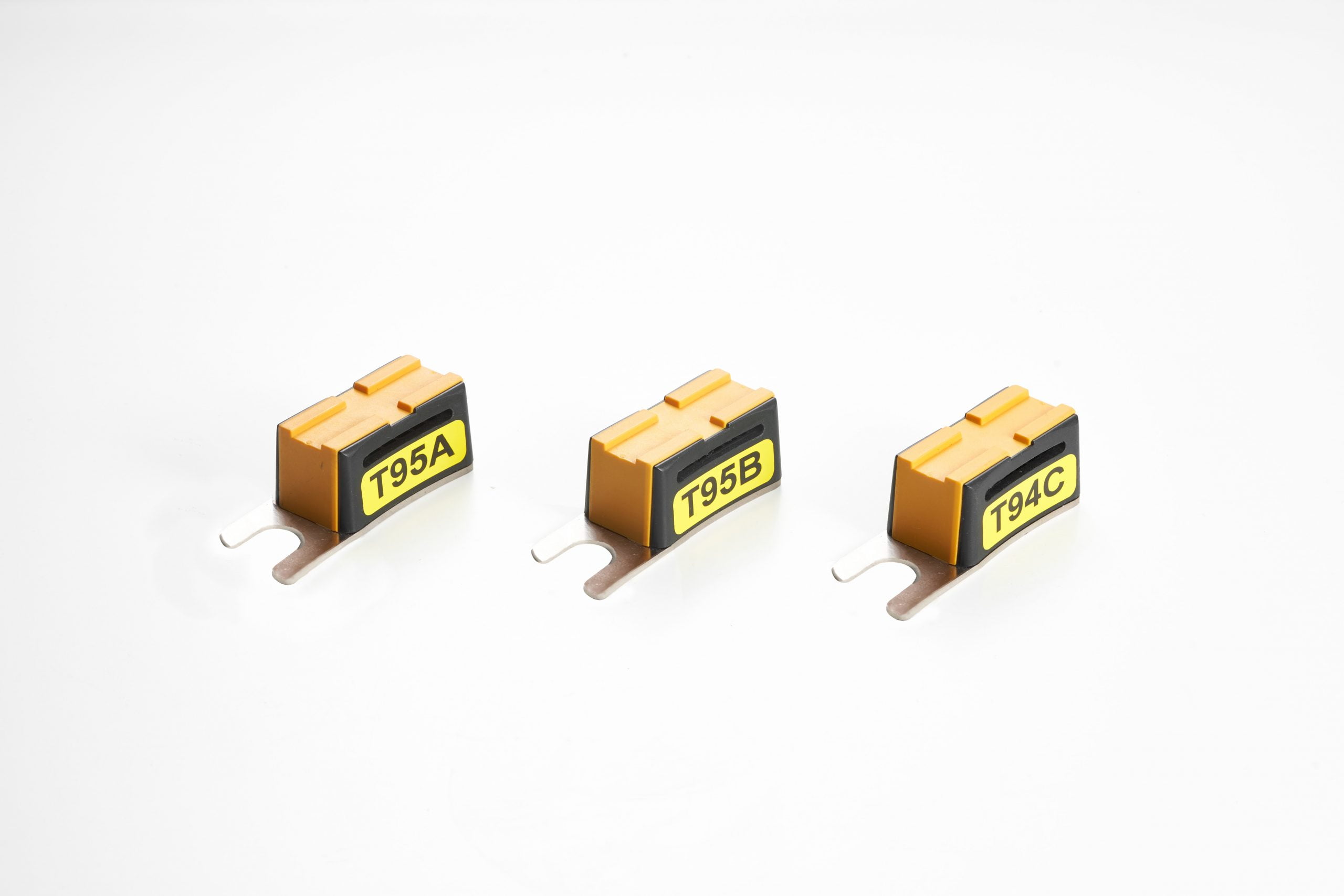
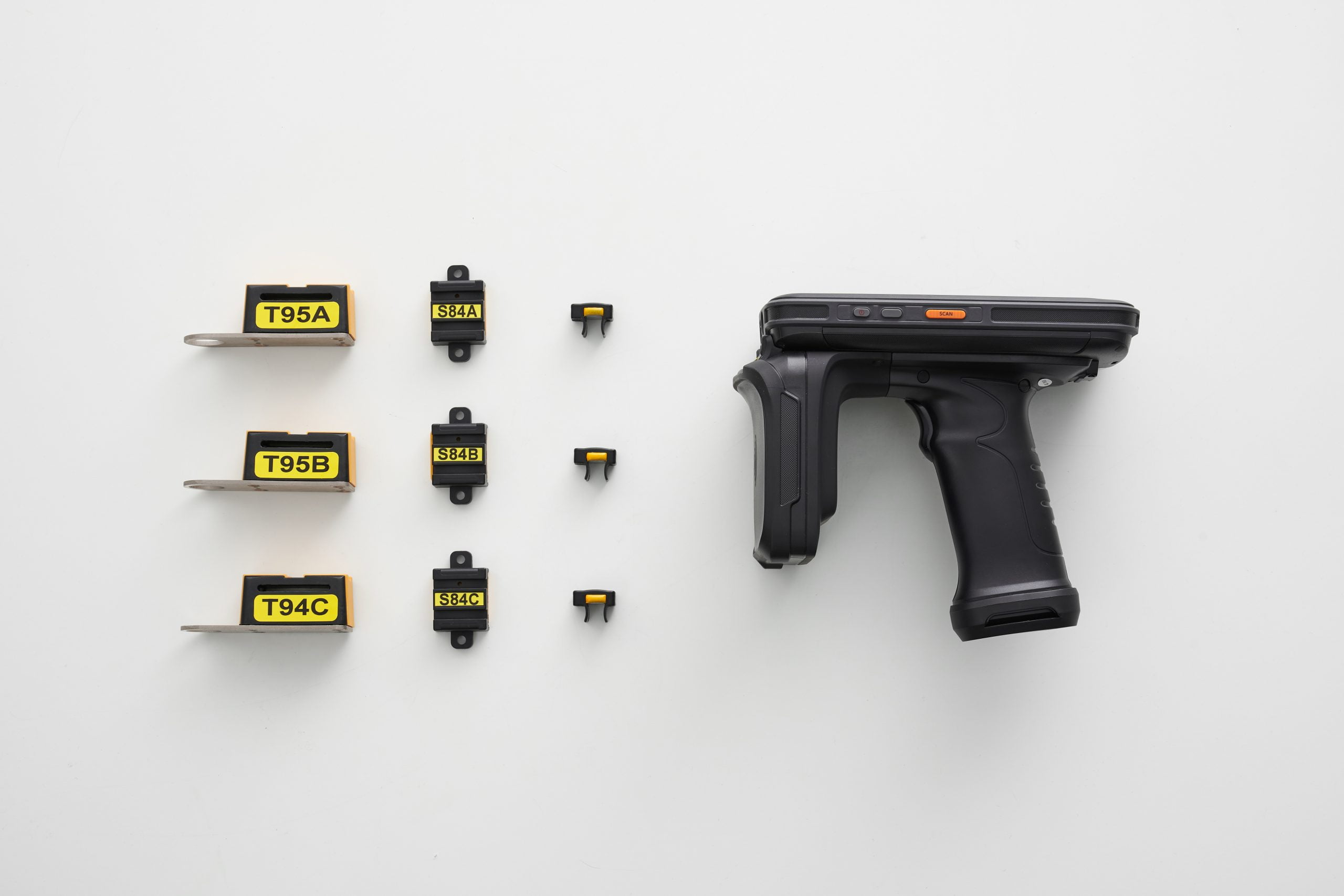
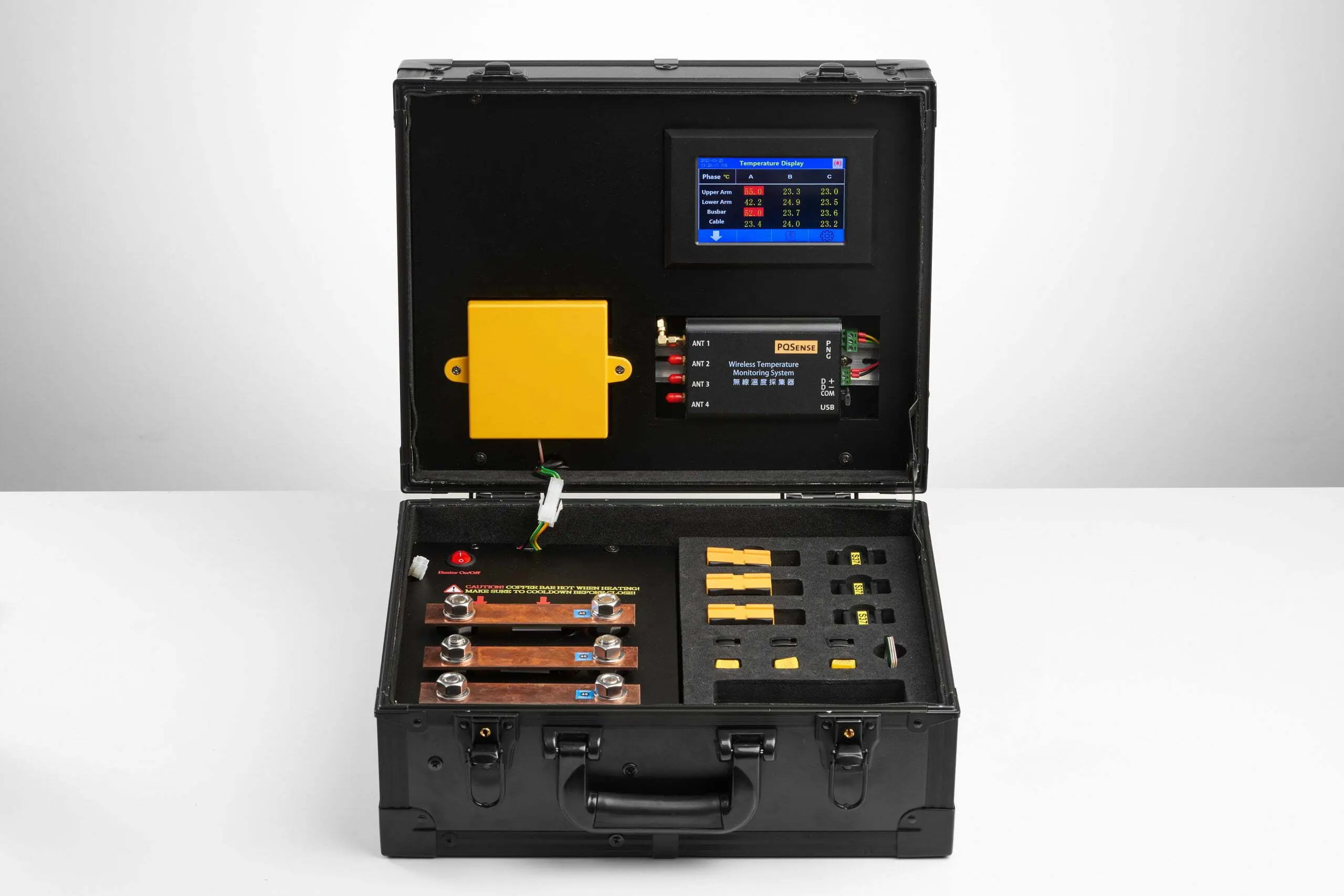
PQSense provides battery-free RFID temperature sensors, fixed temperature readers and handheld readers for monitoring specified locations in power distribution equipment.
IEEE 2969-2025 can be used as guidance when planning measurement points, commissioning identification checks and record-keeping methods.
Contact us to discuss measurement points and the data to include in maintenance records.
FAQ
Do These Standards Specify Connection Temperature Alarm Thresholds?
The publicly available material does not provide a single threshold for all equipment. IEEE Std 2969-2025 discusses alarm and alert considerations, but thresholds depend on equipment type, installation conditions, point location and loading. A single value cannot be extracted and applied as a universal specification.
Does Tier Certification Mean Electrical Inspections Meet All Requirements?
No. Tier Standard: Topology addresses infrastructure topology classification and performance confirmation, not inspection items. Operational practices are addressed by Tier Standard: Operational Sustainability and the M&O assessment framework. Design and operations are distinct areas and cannot substitute for one another.
Related Reading
- Why Can Electrical Connections Overheat When Data Center Room Temperatures Are Normal?
- Which Data Center Power Distribution Equipment and Hotspots Should Be Monitored?
- Which Power Distribution Equipment and Hotspots Should Data Centers and Semiconductor Fabs Monitor? A Complete Temperature Monitoring Guide
References
- ASHRAE TC9.9: Data Center Power Equipment Thermal Guidelines and Best Practices (2016)
- Uptime Institute: Tier Standard: Topology
- Uptime Institute: Tier Standard: Operational Sustainability
- IEEE Std 2969-2025: IEEE Guide for Continuous Thermal Monitoring of Switchgear and Motor Control Centers up to 52 kV
- FM Data Sheet 5-19: Switchgear and Circuit Breakers (interim revision October 2024)
- Uptime Institute: Official Announcement of the 2024 M&O Assessment Framework