





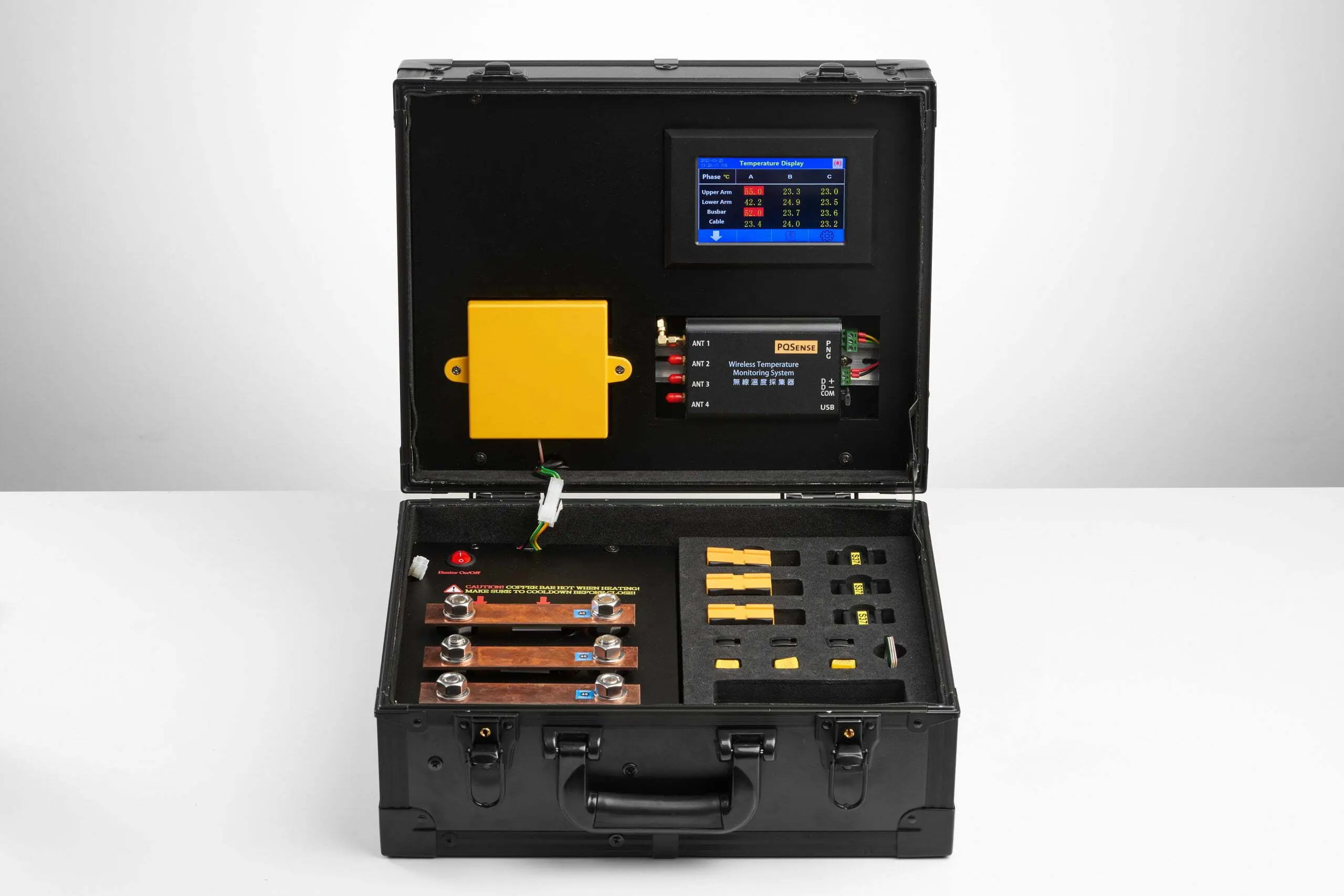


Data center ambient sensors measure the air temperature at their locations, not the localized temperature of electrical connections. Even when room or IT equipment inlet temperatures meet operating requirements, these readings alone cannot rule out overheating connections inside a panel. To understand the thermal condition of power distribution equipment, first establish what the existing measurement points cover, then add data for the connections of concern.
For data center maintenance teams, a “normal temperature” reading should prompt a check of the measurement location and the condition being assessed. This establishes which risks the reading can help evaluate.
What do different temperature readings in a data center represent?
Ambient, IT equipment, and electrical connection temperatures address different maintenance questions. Each reading needs to correspond to its measurement location, equipment conditions, and applicable scope. A single “safe data center temperature” cannot serve as the criterion for all of them.
| Measurement location or target | Main question it can answer | Information still needed |
|---|---|---|
| Room or zone air | Does the ambient temperature at this location meet the planned conditions? | Temperatures at different racks, inside panels, and at individual connections |
| IT equipment air inlet | Does the incoming air meet this equipment’s operating requirements? | Internal chip conditions and localized temperature rises at power connections |
| A specified point on a chip or cooling system | Does the measured component or cooling interface meet its design temperature conditions? | Conditions in external distribution panels, cable terminals, and busbar joints |
| Electrical connection | How is the temperature of this terminal or connection changing? | Conditions at uninstrumented connections and the actual cause of an anomaly |
The data center chapter from the American Society of Heating, Refrigerating and Air-Conditioning Engineers (ASHRAE) describes operating conditions at cooling interfaces between equipment and facilities, such as air inlets for air-cooled equipment and liquid connections for liquid-cooled equipment. This information can be used to assess IT equipment cooling conditions; it cannot directly serve as a temperature criterion for power distribution connections.
Why can connections develop localized heating even when ambient temperatures are normal?
Loose terminals or corrosion at contact surfaces can increase contact resistance and concentrate heat at a connection, while a nearby air sensor may not reflect that localized change. Inspection needs to establish where the heat is actually occurring; normal ambient conditions do not establish that a connection is normal. For common locations, see Five Types of Electrical Connection Hotspots.
What other data is needed to assess an abnormal connection temperature?
First identify the actual connection behind the reading, then review its load at the time and historical records under similar conditions. This helps maintenance teams narrow “somewhere is hot” down to a specific location and period that can be investigated.
- Verify the measurement target. An enclosure’s exterior surface, the air inside it, and a cable terminal are different measurement points. Labels should identify the equipment, connection location, and phase where applicable.
- Compare operating conditions. When examining connection temperature changes, use power-monitoring and maintenance records to establish the operating conditions at that time.
- Check whether the data is comparable. Compare the same connection under similar load and ambient conditions. For interpreting common temperature changes, see Industrial Temperature Monitoring: Heat Sources, Methods and Deployment Decisions.
For an overview of monitoring priorities across data center power distribution equipment, see “Which Power Distribution Equipment and Hotspots Should Data Centers and Semiconductor Fabs Monitor? A Complete Temperature Monitoring Guide” .
How does PQSense obtain connection temperatures inside a panel?
The PQSense Wireless Temperature Monitoring Solution uses battery-free passive RFID temperature sensors to measure designated connections. Antennas are arranged inside the panel according to its compartments, and the reader supplies RF energy and reads the data. A fixed configuration can add localized connection information that ambient sensing does not cover.
After installation, verify that designated measurement points can be read under normal conditions with cabinet doors closed and covers in place. PQSense can assess a configuration using the critical distribution equipment list, interior panel photographs, and site conditions. Qualified personnel carry out installation under outage safety procedures, then verify reading and data updates after power is restored.
PQSense Solution Specifications at a Glance
| Item | Specification |
|---|---|
| System components | Battery-free RFID temperature sensors, temperature-monitoring antennas, and a fixed temperature reader. |
| Power supply | The sensors are battery-free; the fixed reader requires an external power supply. |
| Suitable measurement points | Suitable copper busbar joints, circuit breaker contacts, or cable connections, depending on the sensor model. |
| Data interface | The fixed reader supports RS485 / Modbus RTU. Connection to the existing platform and responsibility for alerts must be confirmed during deployment. |
| Sensor measurement range and accuracy | Sensor models with published specifications: −20 to 125°C; accuracy ±2°C. |
| Deployment track record | According to PQSense’s October 2026 deployment reference, more than 16,000 systems have been deployed across more than 300 sites in 17 countries since 2017. About PQSense |
Contact us to review whether the electrical connections of concern are covered by monitoring.
FAQ
Can data center ambient temperature standards be used directly to set connection alerts?
No. Ambient requirements and permissible connection operating temperatures apply to different equipment and materials. Connection alerts need to be set according to equipment specifications, conductor and insulation conditions, and actual operating conditions.
If infrared thermography and a connection sensor show different readings, does that mean one is inaccurate?
Not necessarily. They may be measuring different locations or surfaces. Readings can also be affected by measurement time, thermographic observation conditions, and sensor installation. First establish whether the measurement targets and conditions are comparable, then check the condition of the instruments and sensors.
Does a normal temperature at one connection mean the entire distribution panel is operating normally?
No. A single measurement point reflects the temperature at that location only. Other phases, incoming or outgoing terminals, and busbar joints may have different conditions. Know which locations are instrumented and which remain outside the monitoring coverage, and continue other necessary inspections and maintenance.
If a rack PDU already displays temperature, does upstream distribution equipment still need to be checked?
First identify where the PDU’s displayed temperature is measured. If that measurement does not cover the busbar joints or terminals of concern inside upstream distribution panels, it cannot establish that those connections are normal. Whether to add measurements should be assessed according to equipment criticality and existing measurement-point coverage.
Reference: IEEE 2969-2025 Guide for Continuous Thermal Monitoring of Switchgear and Motor Control Centers.