





Preventive electrical inspections in data centers should cover busbar joints and fastening bolts, circuit breaker moving and fixed contacts, incoming and outgoing cable terminals, fuse clips, and internal and external terminals on transformers, UPS units and transfer equipment. These are all current-carrying connections.
Insufficient contact pressure and deterioration of contact surfaces are common causes of increased contact resistance and localized heating at these points. Preventive inspections should therefore assess the condition of each connection, rather than simply confirm that equipment is still supplying power.
Which Locations Should Be Checked First?
Start with power distribution equipment supplying critical loads, rather than listing every section of the entire supply path. Examples include panels supplying rows of critical racks, their upstream switchgear and transformers.
| Inspection location | Common causes | Possible signs | Inspection and follow-up |
|---|---|---|---|
| Busbar joints and fastening bolts | Loose bolts, failed washers, oxidation or contamination of contact surfaces | Increasing interphase temperature differences; a progressive temperature rise at the same location | Check torque and inspect contact surfaces during an outage; monitor connection temperature and use infrared verification where there is a line of sight |
| Circuit breaker moving and fixed contacts | Poor positioning, insufficient contact pressure, broken or worn pressure springs, damaged contacts | Elevated temperature on one phase; temperature changes after operation | Inspect contacts and verify positioning during an outage; monitor connection temperature |
| Incoming and outgoing cable terminals | Faulty crimping, loose terminals, mismatched cable and terminal sizes | High temperature on one phase inside a terminal box; a larger temperature difference as load rises | Inspect terminals and verify fastening during an outage; monitor connection temperature and inspect inside the terminal box using infrared thermography |
| Fuse clips | Worn clips, insufficient clamping force or contact area | Localized abnormal temperature rise at the clip or connection | Inspect clips during an outage; monitor connection temperature |
| Terminals on transformers, UPS units and transfer equipment | Loose terminals, prolonged high loading, deteriorated contact surfaces | Terminal temperature rise; interphase imbalance | Measure internal and external terminal temperatures; use the manufacturer's monitoring and maintenance procedures for internal components |
The methods in the table have different prerequisites. Torque checks and contact-surface work require an outage. Connection temperatures can be measured during energized operation, but sensor installation also requires an outage and completion of safety checks. Recrimping, cleaning or component replacement should follow inspection findings and manufacturer instructions; they are not automatic tasks at every service.
Why Track Temperatures at These Locations?
Abnormal connection temperatures can provide a reason for further investigation, while the root cause still requires on-site inspection. The following historical case from an industrial power distribution site illustrates how temperature data can guide an investigation.
In March 2015, during annual maintenance at Mailiao A Factory, wireless temperature monitoring indicated 115°C on the T-phase cable connection of a 3.3 kV air compressor. An infrared check measured 111.2°C. Inspection during an outage confirmed faulty crimping of the cable connection. After recrimping and re-energization, the temperature returned to the normal range.
Keep readings from the two measurement methods separate. The temperatures in this case are not universal alarm thresholds.
What Can Periodic Inspections Miss?
Periodic inspections reflect conditions at the time of measurement. Changes between inspections may go unrecorded. Common information gaps include:
- Limited visibility: Infrared thermography requires an observable surface. Closed panel doors or obstructions can block the view of internal connections. Whether a panel may be opened for measurement depends on the site's safety assessment and work procedures.
- Different load conditions: An inspection at a lower load may not reveal the abnormal temperature rise that occurs at higher loads.
- Inconsistent comparison baselines: Without historical data from the same point under similar load conditions, long-term changes are harder to assess.
Which Preventive Checks Should Be Planned?
Allocate inspection resources according to equipment criticality, rather than applying the same checklist to every asset:
- Identify the loads supplied. List the equipment supplying critical racks, cooling pumps and fans, together with its backup supply paths. In some redundant architectures, backup paths carry little load until a transfer occurs, so they need to be assessed separately.
- Schedule work that requires an outage. Torque checks, contact-surface inspections, and checks of contacts and clips require de-energization and should be coordinated with annual maintenance or sectional outages.
- Fill temperature data gaps during energized operation. Install temperature sensing at critical connections on equipment that is difficult to open frequently or has limited outage windows, so changes between inspections can be recorded. IEEE 2969-2025 states that continuous thermal monitoring can supplement or replace periodic infrared inspections where applicable.
- Define signs that warrant investigation. A connection running hotter than before under similar loading, increasing interphase differences, several points heating together, or temperatures rising again after a repair all merit further checks.
- Keep comparable records. Record the point location, measurement method, load at the time and action taken, so the next measurement has a usable reference.
PQSense Passive Wireless RFID Temperature Monitoring
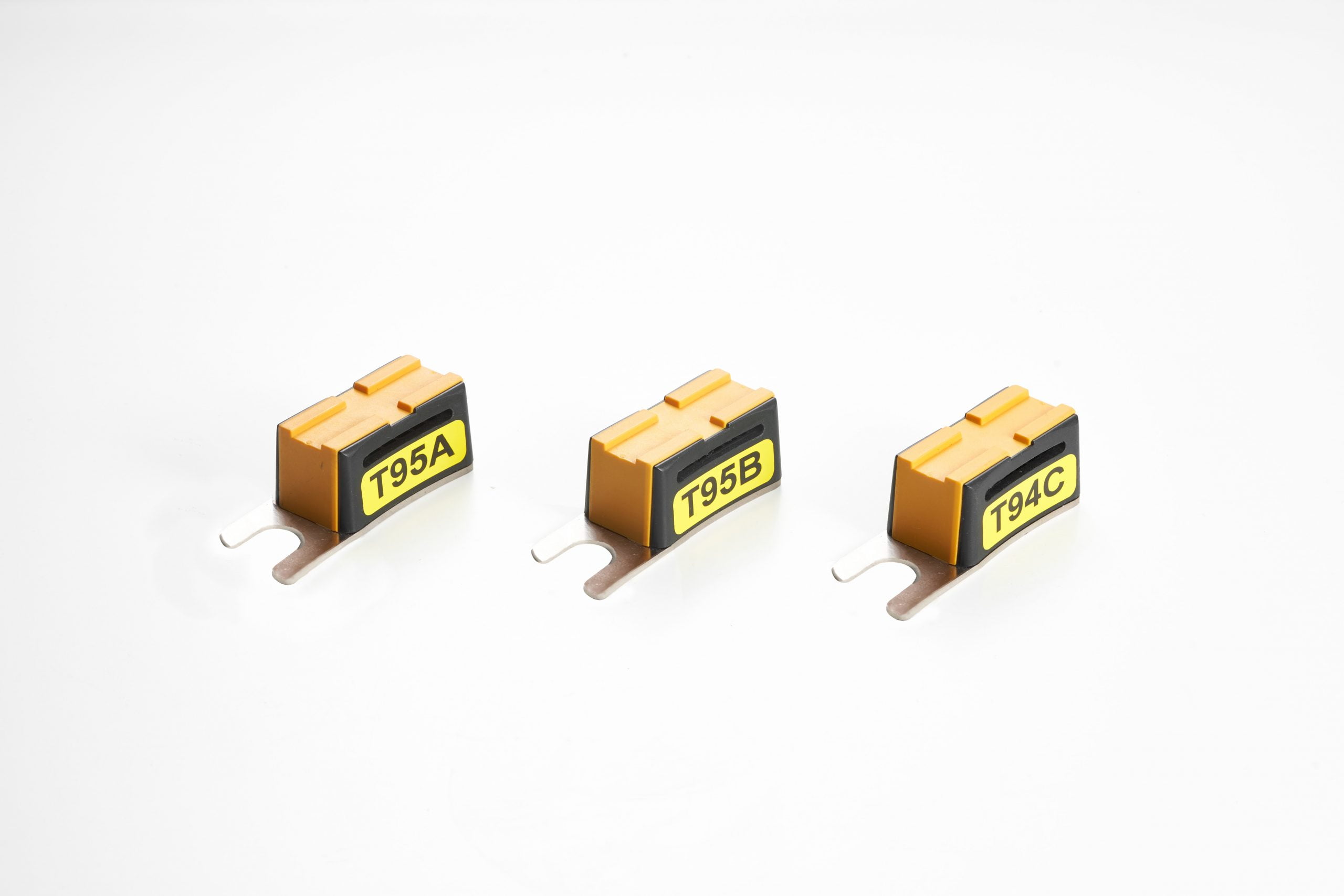
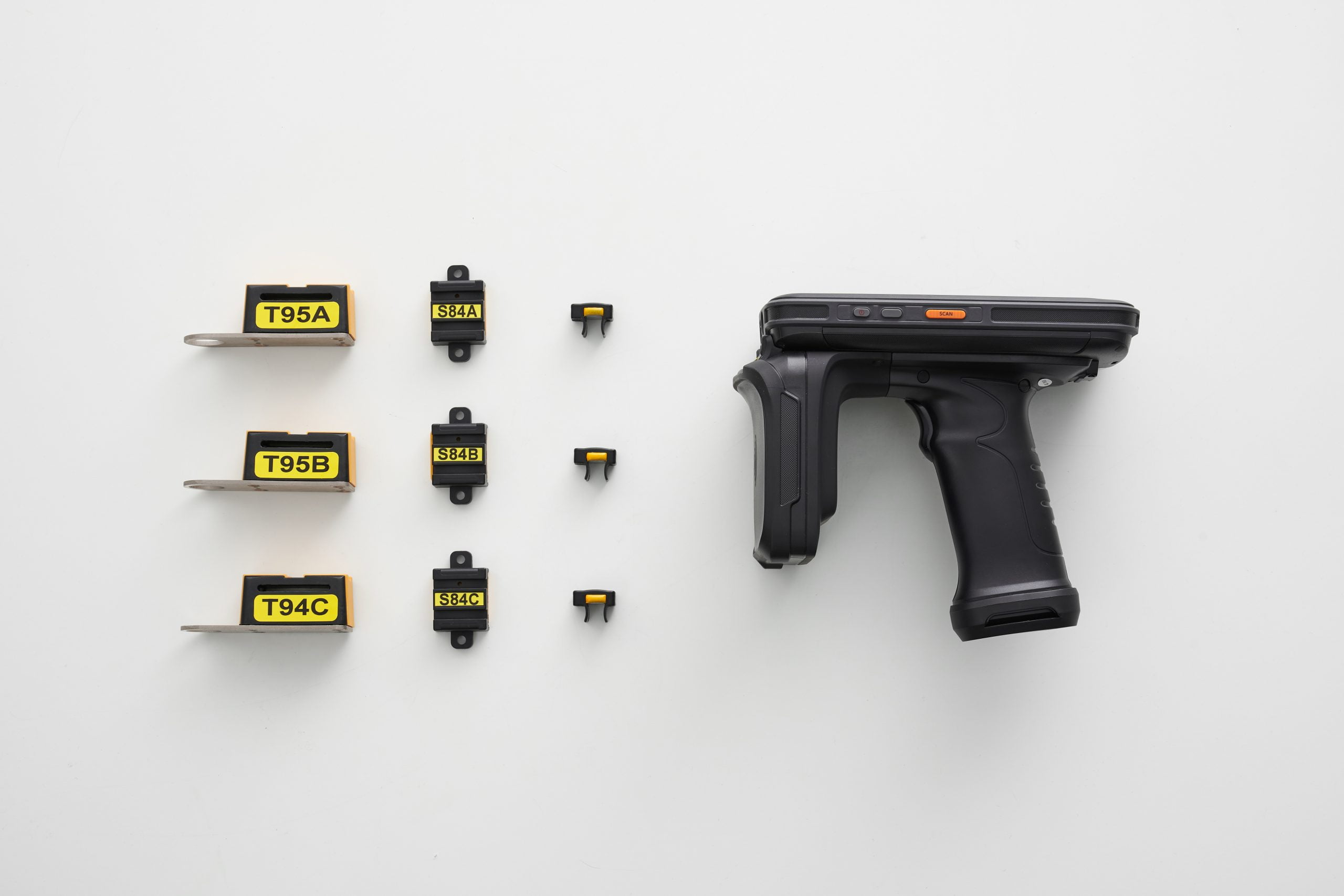
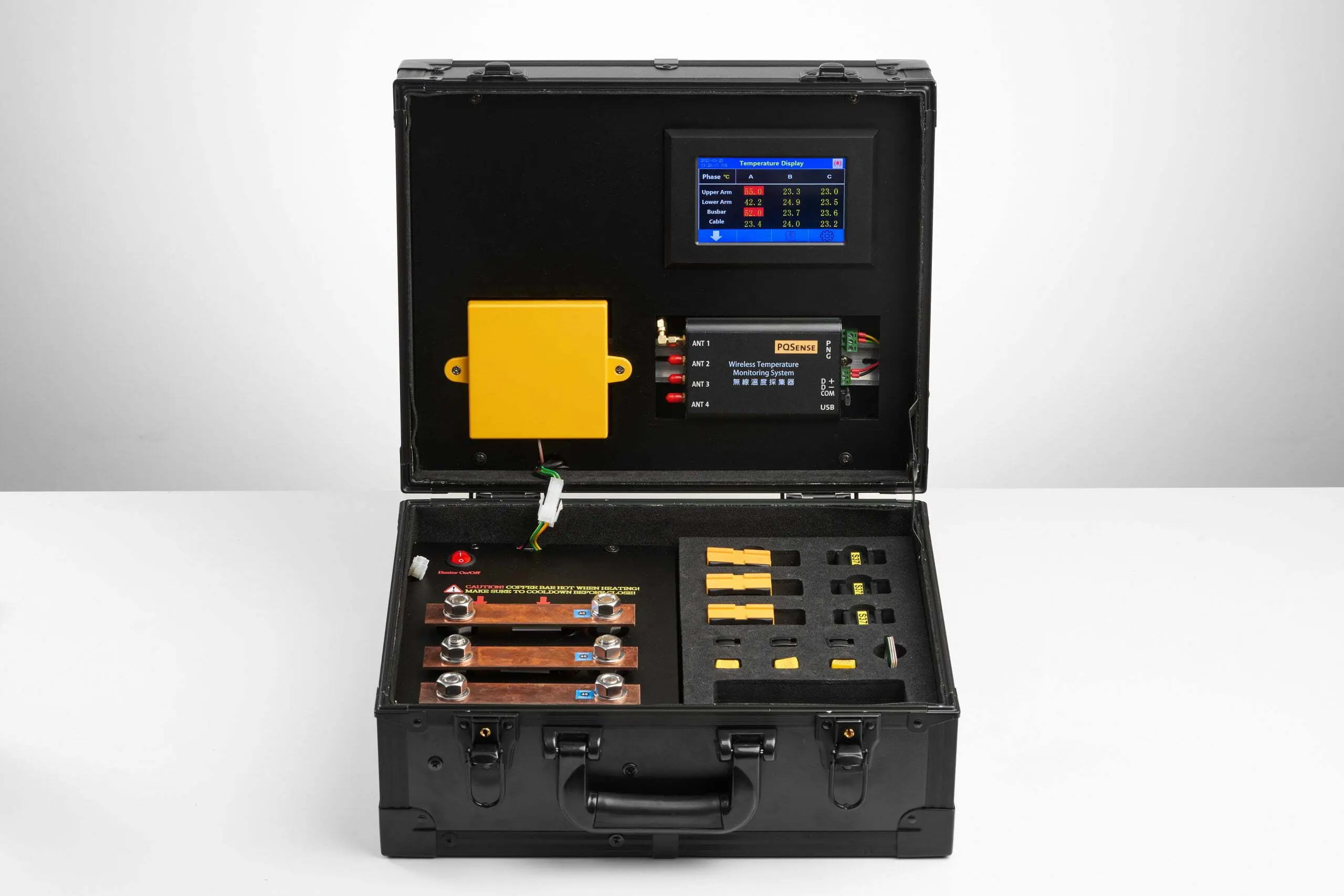
PQSense provides battery-free RFID temperature sensors, fixed temperature readers and handheld readers for monitoring specified locations in power distribution equipment. Sensor installation requires an outage. Once installation is complete and the equipment is re-energized, a fixed system can provide continuous monitoring.
Select sensors to match the connection type. Corresponding designs are available for copper bars and busbars, circuit breaker tulip moving contacts and fixed contacts, bolts, and ring main unit cable terminations. These provide a starting point for measurement-point assessment (see PQSense product information). A fixed configuration captures changes between inspections; handheld readers read installed sensors within the effective range and record readings together with sensor IDs.
Contact us to discuss measurement-point planning for critical data center power distribution equipment.
FAQ
How Often Should Bolt Torque Be Rechecked?
The interval depends on equipment criticality, changes in loading and previous findings; there is no single interval for all equipment. A history of loosening at the same point or a substantial load increase calls for a shorter interval. If work is limited to an annual outage, connection temperatures can be tracked in the meantime to help prioritize the next intervention.
Can an Alarm Be Closed Once the Connection Temperature Returns to Normal?
Not necessarily. The temperature may have fallen because the load decreased, rather than because the connection improved. Before closing the issue, compare readings from the same point under similar loading and confirm that inspection and corrective actions have been documented.
When a Connection Overheats, Should Load or Contact Condition Be Checked First?
Check both together. Compare the current with previous conditions, then review historical temperatures at the same point under similar loading. If the temperature rises without a substantial load change, contact condition becomes a more likely factor. Temperature alone cannot establish the cause; inspection during an outage is still needed.
Do Connections in New Data Center Equipment Also Need Inspection?
Yes. Faulty crimping, poor positioning and inadequate fastening can originate during installation, not only in aging equipment. Establishing a normal temperature baseline when new equipment enters service provides a reference for later comparisons.
Related Reading
- Which Data Center Power Distribution Equipment and Hotspots Should Be Monitored?
- Why Does a Data Center with Power Monitoring Still Need Electrical Connection Temperature Monitoring?
- Which Power Distribution Equipment and Hotspots Should Data Centers and Semiconductor Fabs Monitor? A Complete Temperature Monitoring Guide