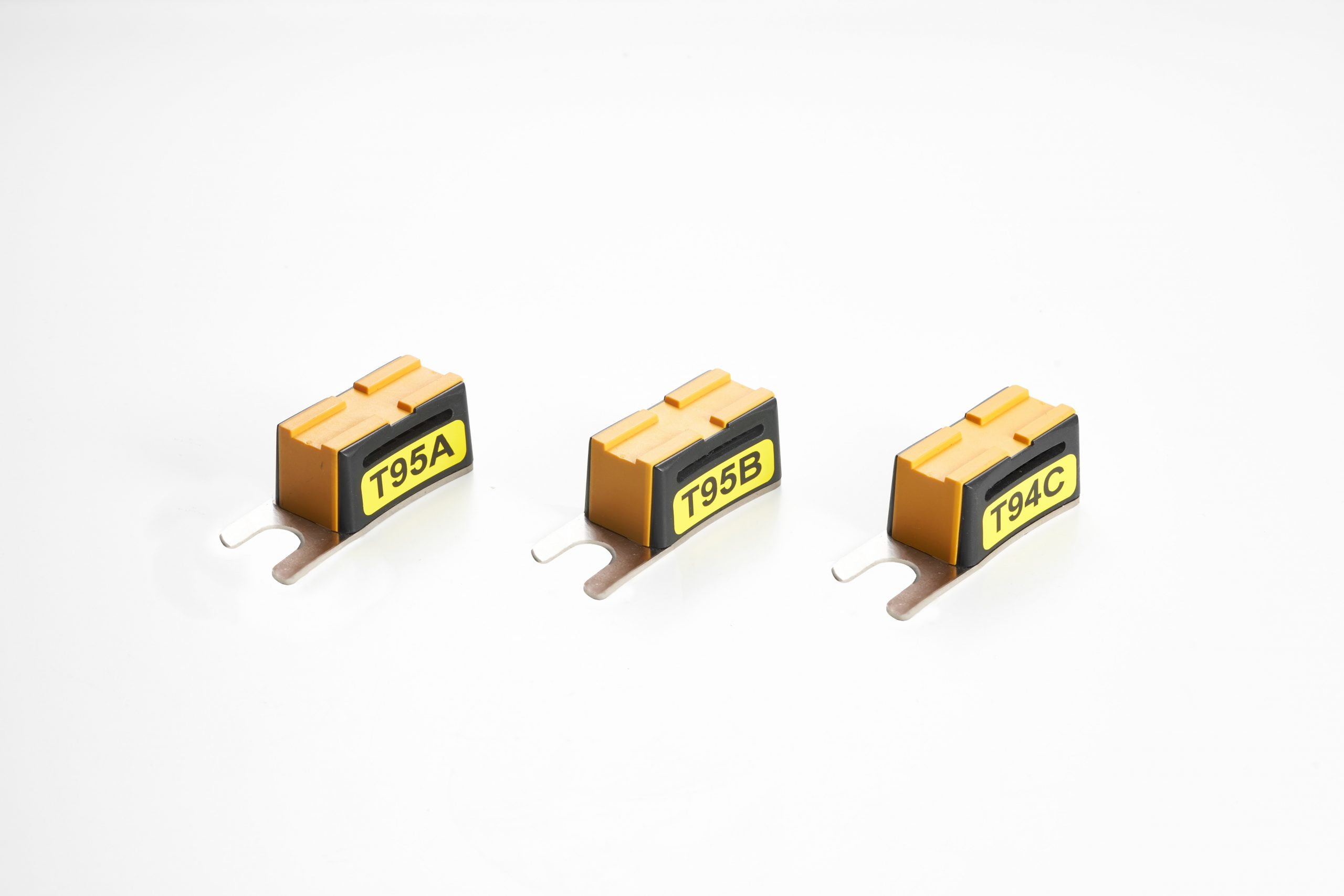


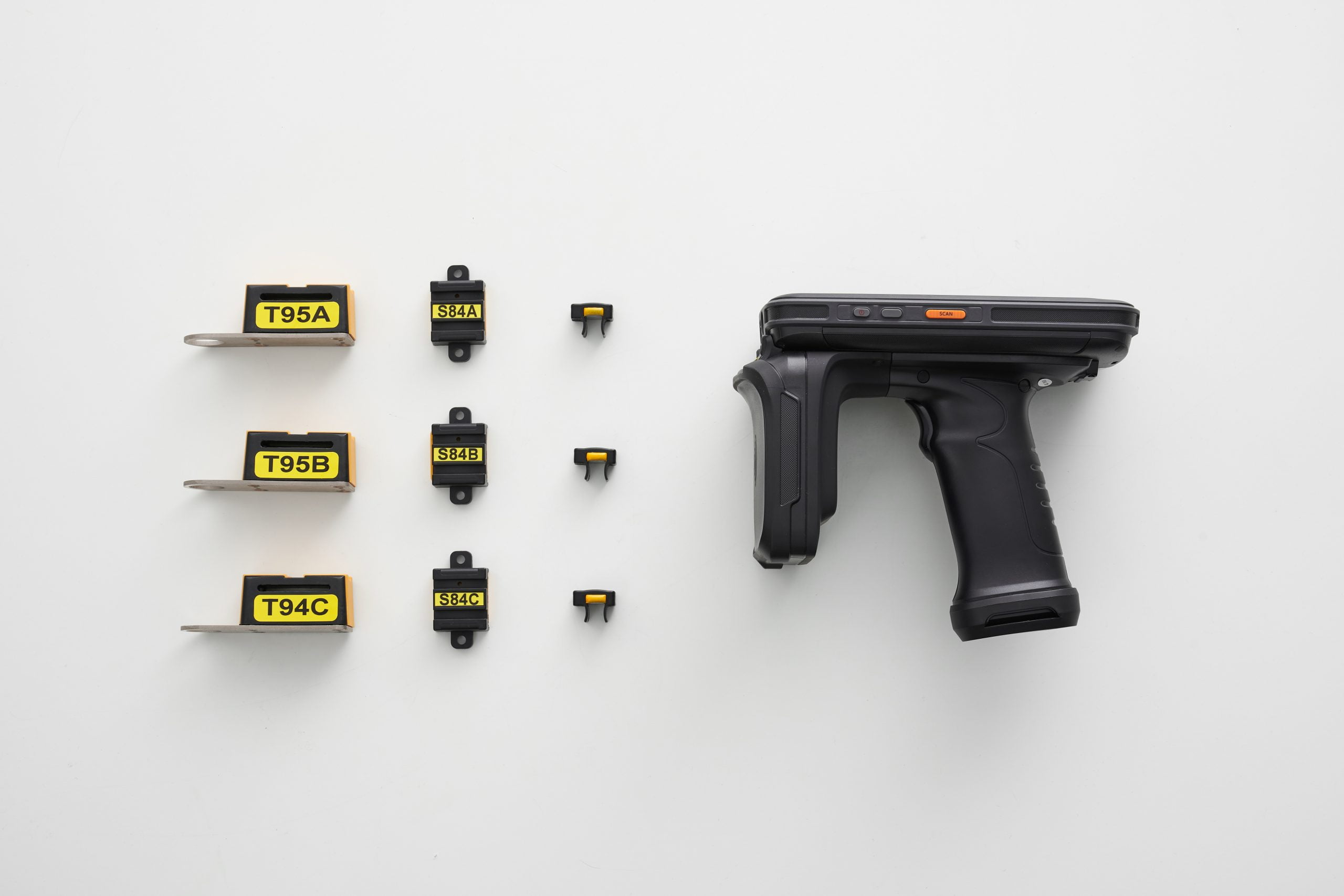


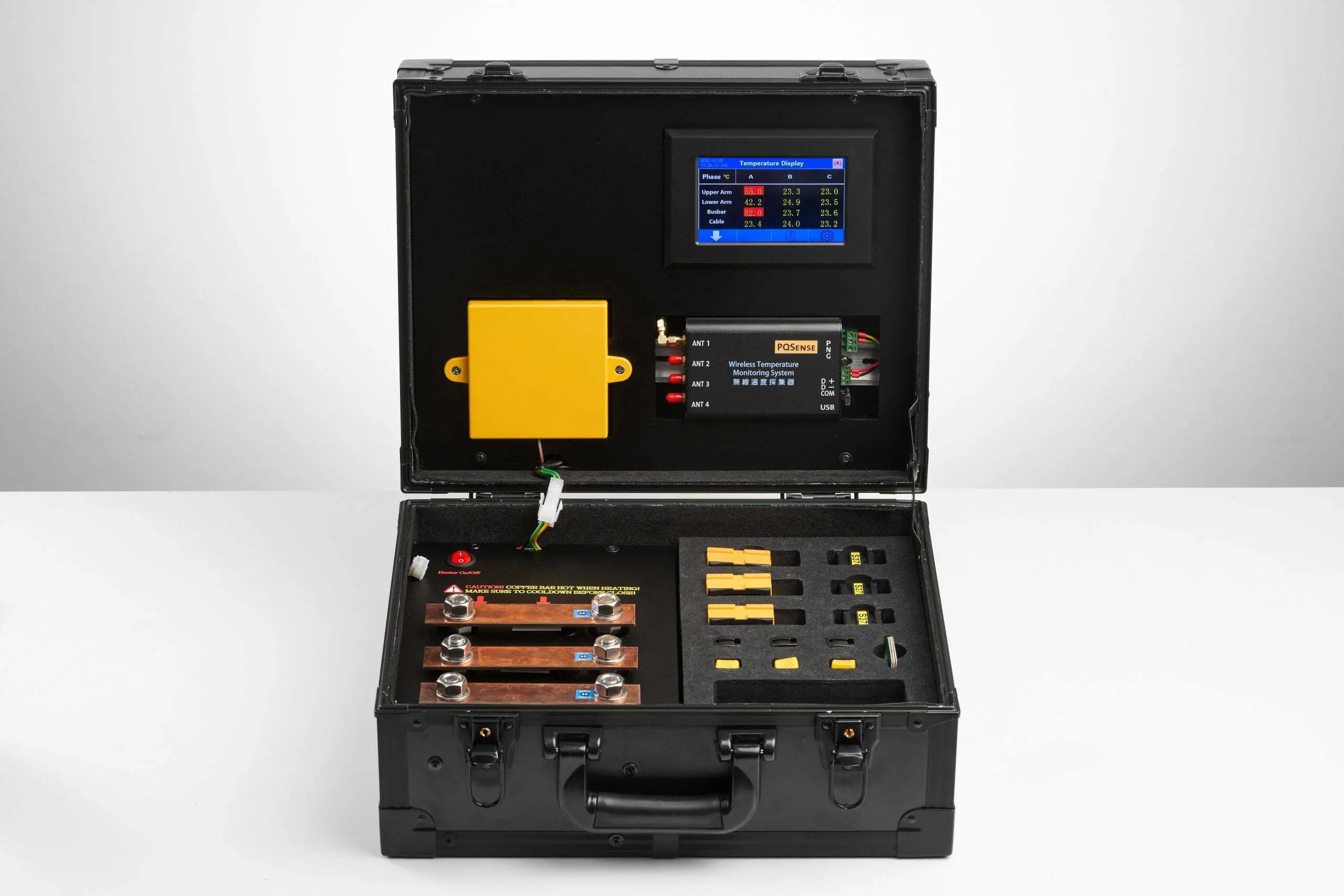






Most Industrial Innovations Start with Ambition. Ours Started with an Explosion.
Years ago, our founder was called to investigate a power cabinet explosion at a factory in Taiwan. The cause: a hidden temperature spike inside a switchgear panel. The connection had been degrading for weeks — resistance climbing, heat building — until the insulation failed and an arc flash destroyed the equipment.
The factory had temperature sensors installed. They weren’t enough. The readings were disrupted by electromagnetic interference. The installation was complex and required extended outages. And the sensors simply weren’t designed for the harsh, high-voltage environment inside medium-voltage switchgear.
That incident revealed a painful truth: the industry lacked a reliable, real-time, always-on temperature monitoring solution for environments where wires couldn’t reach and batteries couldn’t survive.
The Problem We Set Out to Solve
Medium-voltage switchgear is the backbone of industrial power distribution. It carries thousands of amps through bolted connections that degrade over time. Every connection is a potential failure point — and every failure can mean production loss, equipment destruction, or worse.
Yet monitoring these connections had been effectively impossible:
- Wired sensors created insulation clearance violations inside MV panels
- Battery sensors failed above 60°C — exactly the temperatures that indicate developing faults
- Infrared cameras required opening energized panels, creating arc flash risk, and only captured snapshots
- Manual inspection was infrequent, subjective, and couldn’t see inside insulation boots
The industry needed something fundamentally different: a sensor that requires no power, no wires, and no maintenance — one that could be installed directly on high-voltage connections and monitor continuously, 24/7, without any human intervention.
Building Something That Didn’t Exist
PQSense was founded in 2016 with a clear but ambitious vision:
- Build a sensor that doesn’t need power
- Make it wireless
- Make it work deep inside the high-voltage heart of industrial infrastructure
The answer was passive RFID — radio-frequency identification technology that harvests energy from a reader’s radio signal. No battery. No wires. The sensor sits dormant until the reader energizes it, at which point it measures the temperature at its contact point and transmits the reading back wirelessly.
But adapting RFID for industrial temperature monitoring required solving problems that consumer RFID (warehouse tags, access cards) never had to face:
- Accuracy at high temperatures — consumer RFID doesn’t need ±2°C accuracy at 125°C
- Metal environment performance — RFID signals behave differently around metal busbars and steel enclosures
- Reliability over decades — these sensors need to work for 15+ years without maintenance in harsh conditions
- Digital addressing — each sensor must be individually identifiable among 6–9 sensors in a single panel
- EMI immunity — switchgear generates intense electromagnetic fields that disrupt many sensor technologies
From One Factory to 14,000+ Systems
Today, PQSense passive RFID temperature monitoring is deployed across more than 14,000 installations worldwide:
- Semiconductor fabs — where a single switchgear failure halts production worth millions per hour. One leading semiconductor company has deployed 750+ PQSense systems across multiple facilities.
- Power utilities and substations — protecting grid infrastructure from cascading failures caused by connection degradation
- Petrochemical plants — monitoring in hazardous environments where battery sensors are restricted and wired sensors create clearance violations
- Heavy manufacturing — steel mills, cement plants, and paper mills with high-current electrical systems and continuous production demands
- Data centers — protecting the electrical backbone of cloud and AI infrastructure where uptime SLAs leave no room for unplanned outages
- Rail and transportation — traction power substations and rolling stock electrical systems operating in demanding environmental conditions
What We’ve Learned Along the Way
After deploying 14,000+ systems, certain patterns have become clear:
- Every facility has hidden hotspots. In virtually every new deployment, the first round of monitoring reveals connections running hotter than expected — problems that were invisible to periodic IR inspections.
- Prevention is measurably cheaper than failure. The cost of a PQSense system is a fraction of a single unplanned switchgear outage — before counting equipment replacement, production loss, or safety consequences.
- Maintenance teams become proactive, not reactive. With continuous data, teams schedule repairs during planned outages instead of responding to emergencies. Inspection labor drops by hundreds of hours annually.
- The technology works — but adoption starts with trust. Every major deployment began with a pilot on 2–3 critical panels. Once teams saw real data from their own equipment, expansion followed naturally.
The Mission Continues
The factory explosion that started our journey revealed a gap that the electrical industry had accepted as normal. Temperature monitoring inside energized switchgear was considered impractical, too expensive, or simply impossible.
It’s none of those things. It just required a different approach.
From one explosion came a mission. From that mission came a product now protecting critical infrastructure in over 30 countries. And we’re just getting started.