









Semiconductor Production Never Stops — But Electrical Monitoring Often Does
A modern semiconductor fab runs 24/7/365. Ion implanters, plasma etch systems, lithography tools, and chemical vapor deposition chambers operate continuously, each powered by an electrical distribution system that must be absolutely reliable.
Yet even in the most advanced fabs, the medium-voltage switchgear and low-voltage distribution panels that power these tools remain a monitoring blind spot. A single loose terminal or degraded spring contact can silently build heat until it triggers a fault — halting production lines worth millions per hour.
Why Semiconductor Fabs Are Uniquely Vulnerable
Semiconductor manufacturing creates conditions that accelerate electrical connection degradation:
- High sustained loads — production equipment draws heavy, continuous current through distribution panels
- Thermal cycling — process tools cycle on and off, causing repeated thermal expansion and contraction at bolted connections
- Vibration — mechanical equipment transmits vibration to electrical panels, gradually loosening bolted joints
- Cleanroom access restrictions — electrical rooms adjacent to cleanrooms have controlled access, limiting manual inspection frequency
- Cost of downtime — a single unplanned outage can cost millions in lost production, scrapped wafers, and tool requalification
Traditional monitoring approaches — annual IR inspections, battery-powered sensors, or manual patrol checks — cannot provide the continuous visibility these environments demand.
Where PQSense Sensors Are Installed
Medium-Voltage Switchgear (3.3 kV – 24 kV)
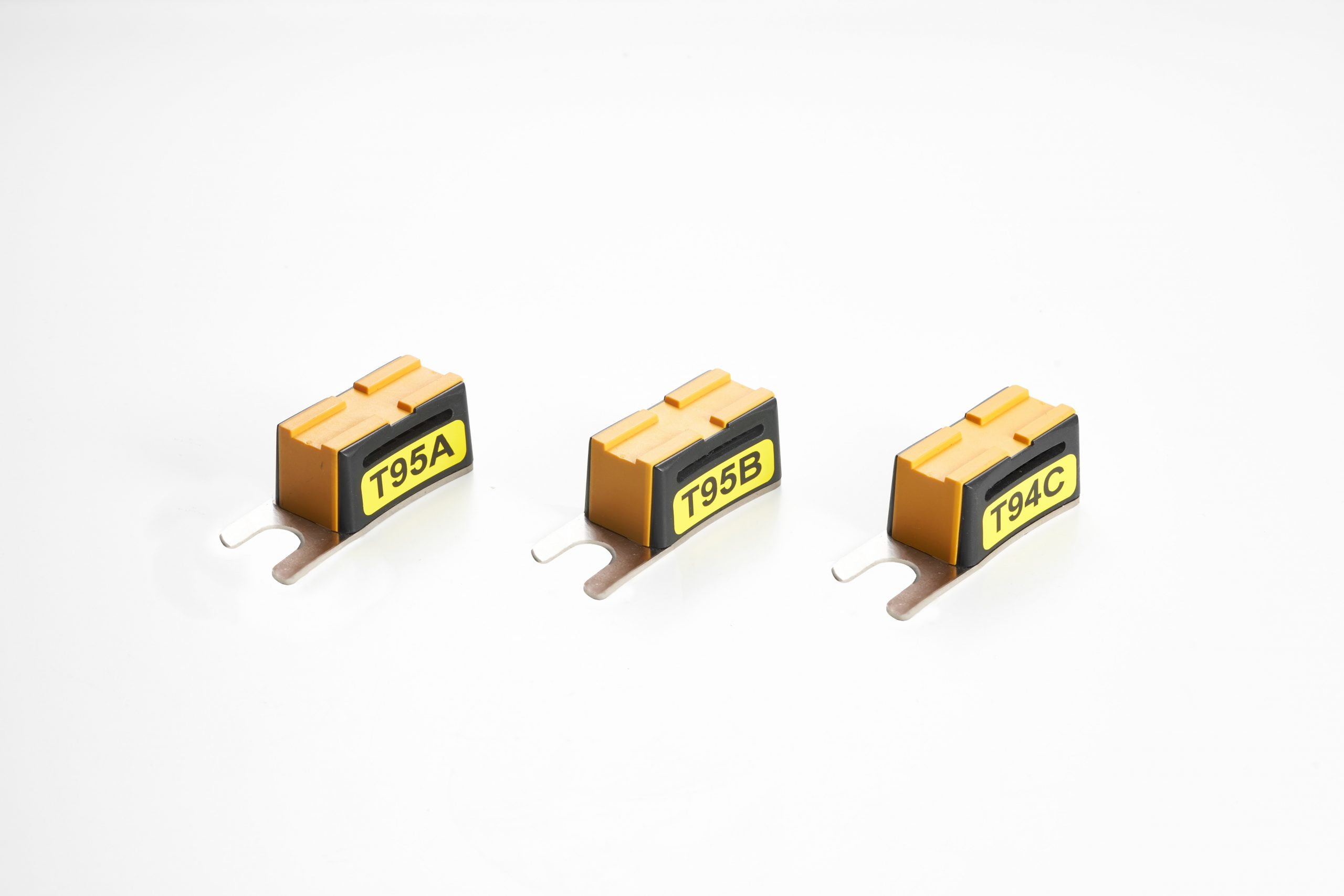
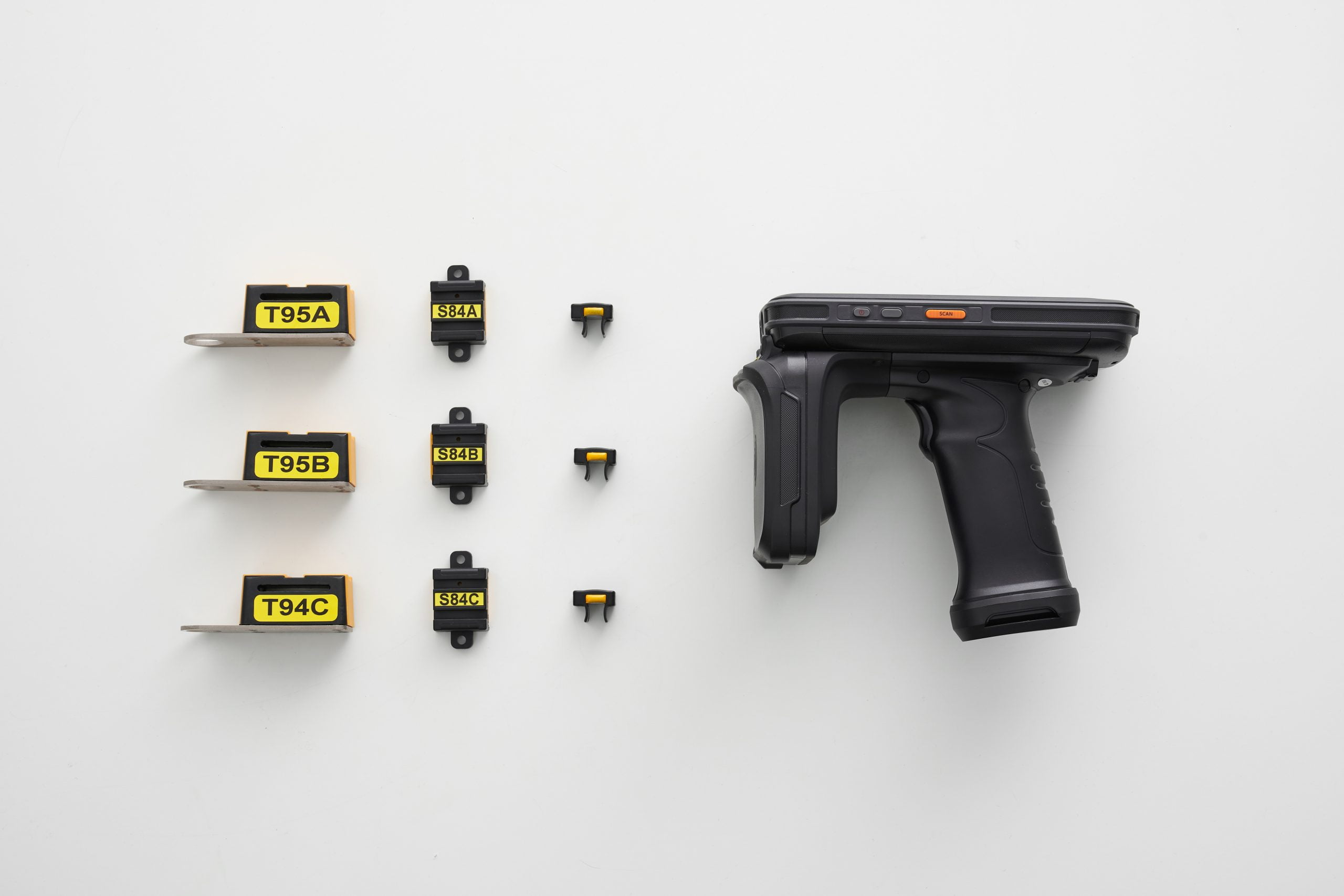
MV switchgear is the primary power distribution backbone of any semiconductor fab. PQSense passive RFID sensors are installed at the critical hotspots where connection degradation is most likely:
- Cable terminals — incoming and outgoing cable connections where crimps or bolted lugs can loosen over time
- Capacitor contacts — power factor correction capacitors with high-current switching contacts
- Circuit breaker clamps — main and feeder breaker jaw contacts that carry full load current
- Busbar joints — bolted busbar connections between sections where differential thermal expansion loosens fasteners
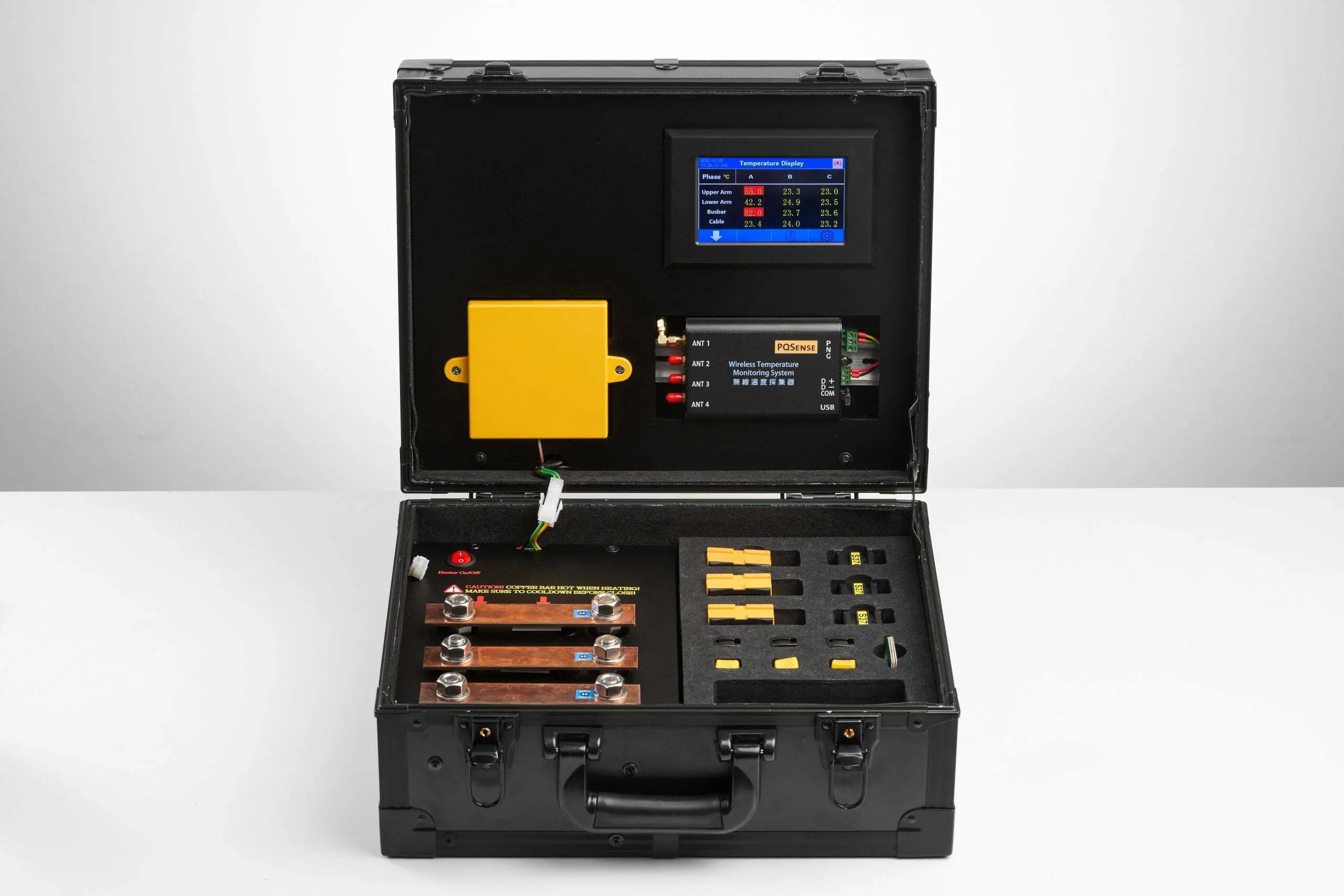
Each sensor requires no power or batteries. Data is continuously collected through antennas routed inside the switchgear compartment to external readers.
Low-Voltage Distribution Boards (220 V – 480 V)
LV distribution is where the fab’s power is divided into hundreds of individual circuits feeding production tools, facility systems, and support equipment. Space is tight, and access during production is limited.
PQSense ultra-slim sensors (as thin as 4 mm) can be installed directly on:
- Busbar joints — main bus connections and tap-off points
- Fuse clamps — where contact degradation causes localized heating under load
- Outgoing feeders — cable connections feeding individual tools or tool groups
- Breaker terminals — load-side connections on molded case circuit breakers
These sensors monitor temperature rise from overcurrent, poor contact, or aging components — providing early warning before a connection failure disrupts production.
Real-World Deployment: 750+ Systems at a Leading Semiconductor Company
One of the world’s largest semiconductor packaging companies — operating critical AI chip packaging capacity — has deployed over 750 PQSense systems across multiple facilities. After evaluating every available monitoring approach, they selected battery-free passive RFID as their standard for continuous thermal monitoring.
Key outcomes:
- Every new switchgear panel now ships with PQSense monitoring built in
- Retrofit installations completed across existing MV switchgear during scheduled maintenance windows
- 24/7 temperature data integrated with facility SCADA for automated alerting
- Zero battery maintenance — eliminating the recurring cost and outage risk of battery-powered alternatives
Integration with Fab Infrastructure
PQSense readers communicate via RS485 / Modbus RTU — the standard protocol already used by most fab monitoring systems. Temperature data integrates directly with:
- SCADA / DCS — real-time temperature display alongside other facility parameters
- Building Management Systems (BMS) — automated alerts and work order generation
- Historian databases — long-term trending for predictive maintenance analytics
- Cloud platforms — remote monitoring for multi-site fab operations
No separate monitoring system or proprietary software required.
Key Specifications
| Parameter | Value |
|---|---|
| Sensor accuracy | ±2°C |
| Temperature range | -20°C to +125°C |
| Power source | None (passive — harvests RF energy) |
| Sensors per panel | 6–9 typical |
| Read range | 0.8–3 m (sensor and antenna dependent) |
| Communication | RS485 / Modbus RTU |
| Reader operating temp | -20°C to 70°C |
| Maintenance | None — battery-free, calibration-free |
Getting Started
Most semiconductor fabs begin with a pilot on their most critical MV switchgear — typically main incoming feeders and bus-tie breakers. PQSense conducts on-site evaluations at semiconductor facilities worldwide, including a walkthrough of your electrical distribution, sensor placement recommendations, and integration planning with your existing SCADA infrastructure.