









Every Method Has Trade-Offs — Here’s How They Compare
Temperature monitoring for medium-voltage switchgear is not a new idea. Maintenance teams have been tracking thermal conditions for decades. What’s changed is the range of available technologies — and the gap between what each can deliver.
This guide compares four established approaches: infrared thermography, battery-powered wireless sensors, wired sensors (thermocouples and RTDs), and passive RFID sensors. Each solves part of the problem. Understanding the trade-offs helps you choose the right fit for your equipment, environment, and maintenance strategy.
Method 1: Infrared Thermography
How It Works
A trained thermographer uses an infrared camera to capture thermal images of switchgear components. The images reveal hot spots — areas where elevated temperature indicates loose connections, degraded contacts, or overloading.
Strengths
- Non-contact measurement — no sensors to install
- Visual thermal map of entire panel in one image
- Well-established practice referenced in NFPA 70B
- Can detect issues across a wide temperature range
Limitations
- Periodic, not continuous — typically annual or semi-annual inspections. A fault developing between inspections goes undetected.
- Arc flash risk — conventional IR requires opening energized panels, exposing personnel to arc flash hazards. IR windows reduce but don’t eliminate this risk.
- Cannot see through insulation — boot-covered connections and insulated busbars are invisible to IR cameras.
- Load-dependent — thermal patterns change with load. An inspection at 50% load may miss issues that appear at full load.
- Requires trained personnel — Level II thermographer certification, plus equipment cost ($10,000–$50,000+ for cameras).
Best For
Commissioning checks, periodic verification of new installations, and facilities where continuous monitoring is not yet deployed.
Method 2: Battery-Powered Wireless Sensors
How It Works
Active wireless sensors mount on switchgear connection points and transmit temperature readings via radio (typically Zigbee, Wi-Fi, or proprietary protocols). Each sensor contains a battery that powers both the temperature measurement and wireless transmission.
Strengths
- Continuous monitoring — data collected 24/7
- Wireless installation — no cable routing through panels
- Established technology with multiple vendors
- Longer communication range than passive systems (10–30 m typical)
Limitations
- Battery degradation above 60°C — lithium batteries lose capacity rapidly at the temperatures where switchgear monitoring matters most. Rated battery life (3–5 years) is optimistic in high-temperature environments.
- Battery replacement requires outage — replacing a battery inside an energized MV panel requires a shutdown and arc flash PPE. This creates recurring maintenance cost and operational disruption.
- Battery failure = monitoring gap — if a battery dies between replacement cycles, that sensor goes silent. The most critical monitoring points become unmonitored.
- Disposal and logistics — battery management adds procurement, inventory, and hazardous waste considerations.
Best For
Low-temperature environments (below 60°C) where battery life isn’t compromised, and where regular maintenance access is available.
Method 3: Wired Sensors (Thermocouples and RTDs)
How It Works
Thermocouples or RTDs (Resistance Temperature Detectors) are mounted directly on connection points, with signal wires routed out of the panel to a data acquisition system.
Strengths
- High accuracy — RTDs offer ±0.1°C or better
- Continuous, real-time measurement
- No battery — powered through the wired connection
- Decades of proven reliability in industrial applications
Limitations
- Insulation clearance violations — wires running through MV panels compromise the insulation coordination required by IEC 62271 and similar standards. This is the primary reason wired sensors are rarely used in medium-voltage switchgear.
- Extended installation outage — routing cables, securing connections, and verifying clearances takes significantly longer than wireless alternatives.
- Mechanical interference — wiring harnesses can interfere with breaker racking, door operation, and maintenance access.
- Not practical for retrofit — existing MV switchgear was not designed to accommodate internal wiring for temperature sensors.
Best For
New-build low-voltage panels where wiring can be designed in from the start, and applications where the highest possible accuracy is required.
Method 4: Passive RFID Temperature Sensors
How It Works
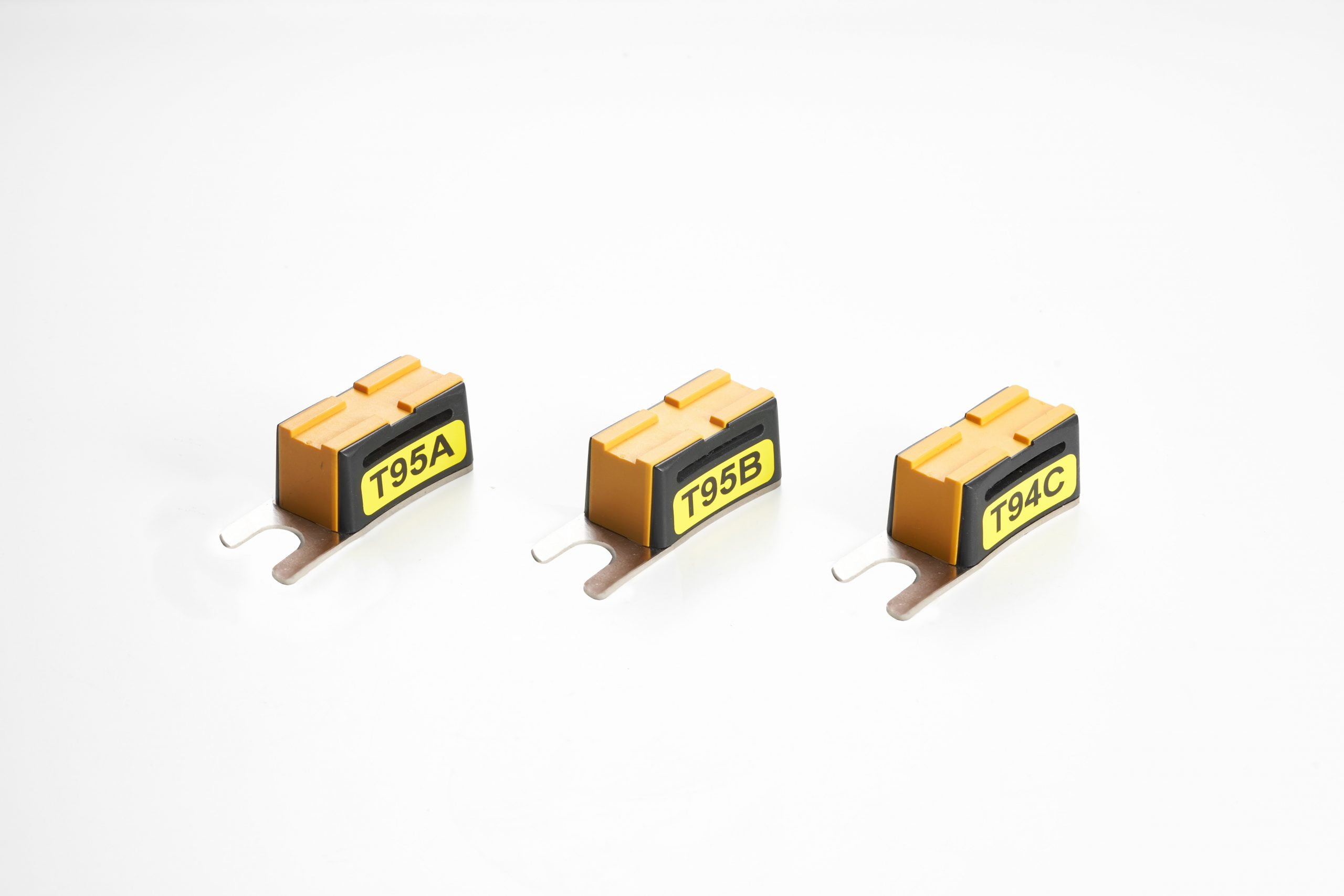
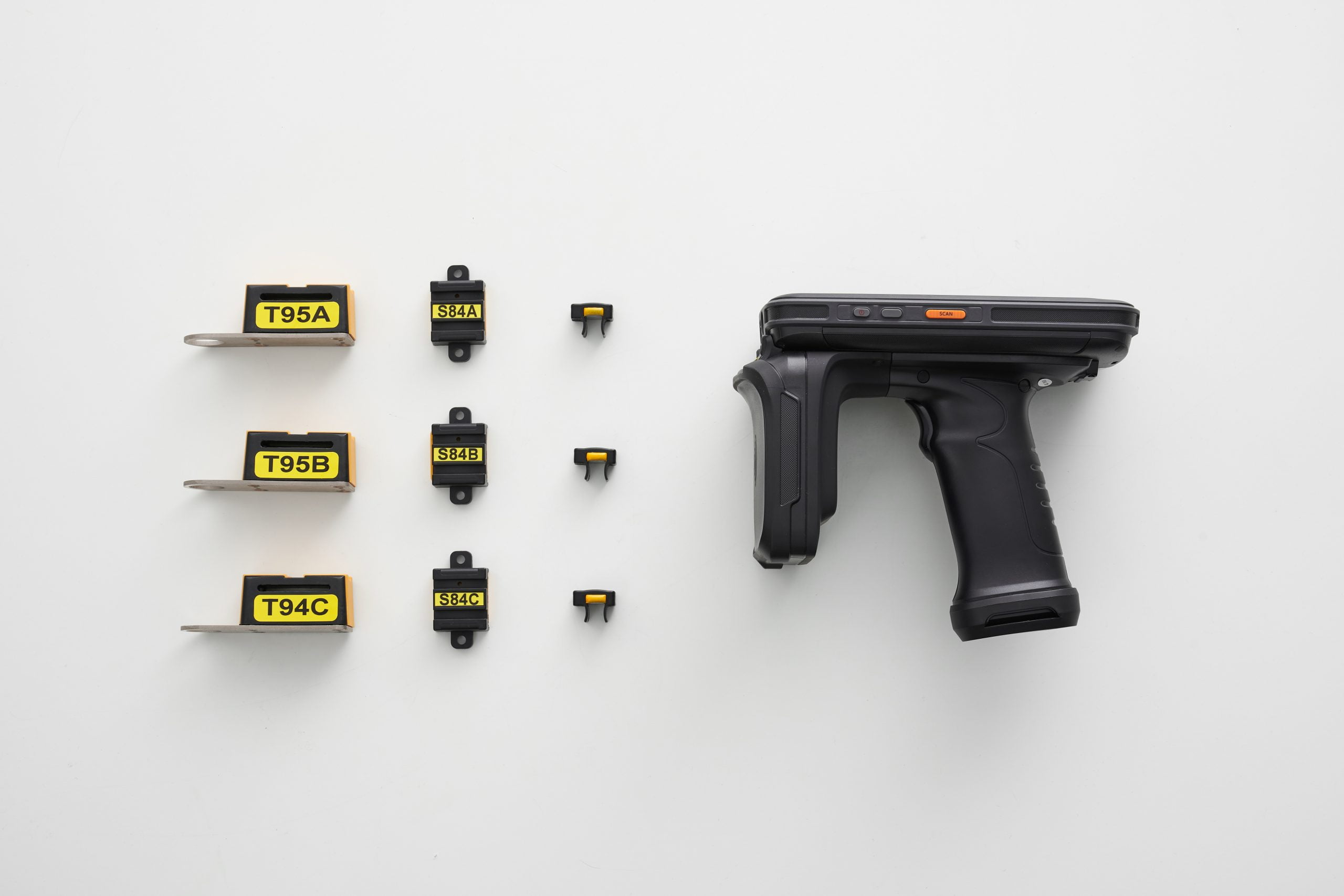
Passive RFID sensors mount directly on switchgear connection points — busbars, breaker jaws, cable terminations. They contain no battery. Instead, they harvest energy from the radio signal emitted by a nearby reader antenna. When energized, the sensor measures the contact temperature and transmits the reading back to the reader wirelessly.
The reader antenna is installed inside the switchgear compartment (RFID cannot penetrate metal enclosures), and the reader polls sensors continuously — 24/7, with no human intervention.
Strengths
- Battery-free — no batteries to degrade, replace, or manage. Eliminates the primary failure mode of active wireless sensors.
- Works at high temperatures — rated from -20°C to +125°C, covering the full operating range of switchgear connections.
- Zero maintenance — once installed, no battery replacement, cable maintenance, or recalibration is required.
- Fast retrofit installation — approximately 30 minutes per panel during a scheduled outage.
- No insulation clearance issues — no wires inside the panel. Sensors and antenna are the only components inside the compartment.
- EMI immune — digital addressing prevents cross-talk. Not affected by electromagnetic interference from high-current busbars.
Limitations
- Shorter read range — 0.8–3 m depending on sensor model and antenna, compared to 10–30 m for battery-powered sensors. This requires the antenna to be inside the same compartment as the sensors.
- Antenna placement required — each switchgear compartment needs an antenna connected to the reader. This adds per-compartment hardware cost.
- Accuracy ±2°C — sufficient for fault detection and trending, but lower than precision RTDs (±0.1°C). For switchgear monitoring, the goal is detecting abnormal temperature rise, not laboratory-grade measurement.
Best For
Medium-voltage switchgear (new and retrofit), harsh or high-temperature environments, hazardous areas where battery sensors are restricted, and any application where zero-maintenance operation is a priority.
Side-by-Side Comparison
| Feature | IR Thermography | Battery Wireless | Wired (TC/RTD) | Passive RFID |
|---|---|---|---|---|
| Monitoring type | Periodic | Continuous | Continuous | Continuous |
| Power source | N/A | Battery | Wired | RF energy harvest |
| Battery replacement | N/A | Every 3–5 years | N/A | Never |
| Works inside closed panels | No | Yes | Difficult | Yes |
| Arc flash exposure | Yes (during scan) | Yes (battery swap) | Yes (installation) | No (after install) |
| MV switchgear compatible | Limited | Yes | Rarely | Yes |
| Retrofit friendly | Yes | Yes | No | Yes |
| Accuracy | ±1–2°C | ±0.5–2°C | ±0.1–1°C | ±2°C |
| Maintenance | Trained operator | Battery logistics | Cable maintenance | None |
| High-temp performance | Good | Degrades >60°C | Good | Good (to +125°C) |
Choosing the Right Approach
The choice depends on your equipment type, operating environment, and maintenance capabilities:
- If you need a baseline assessment → Start with infrared thermography to identify your highest-risk panels.
- If you’re monitoring low-voltage, low-temperature equipment → Battery wireless sensors may be sufficient if you can manage replacement cycles.
- If you’re designing new LV panels from scratch → Wired sensors can be integrated during manufacturing.
- If you need continuous monitoring of MV switchgear → Passive RFID eliminates the battery and wiring constraints that make other continuous methods impractical for medium-voltage equipment.
Many facilities use a combination: infrared thermography for periodic verification and commissioning, with passive RFID providing continuous 24/7 monitoring on critical panels.
See It In Action
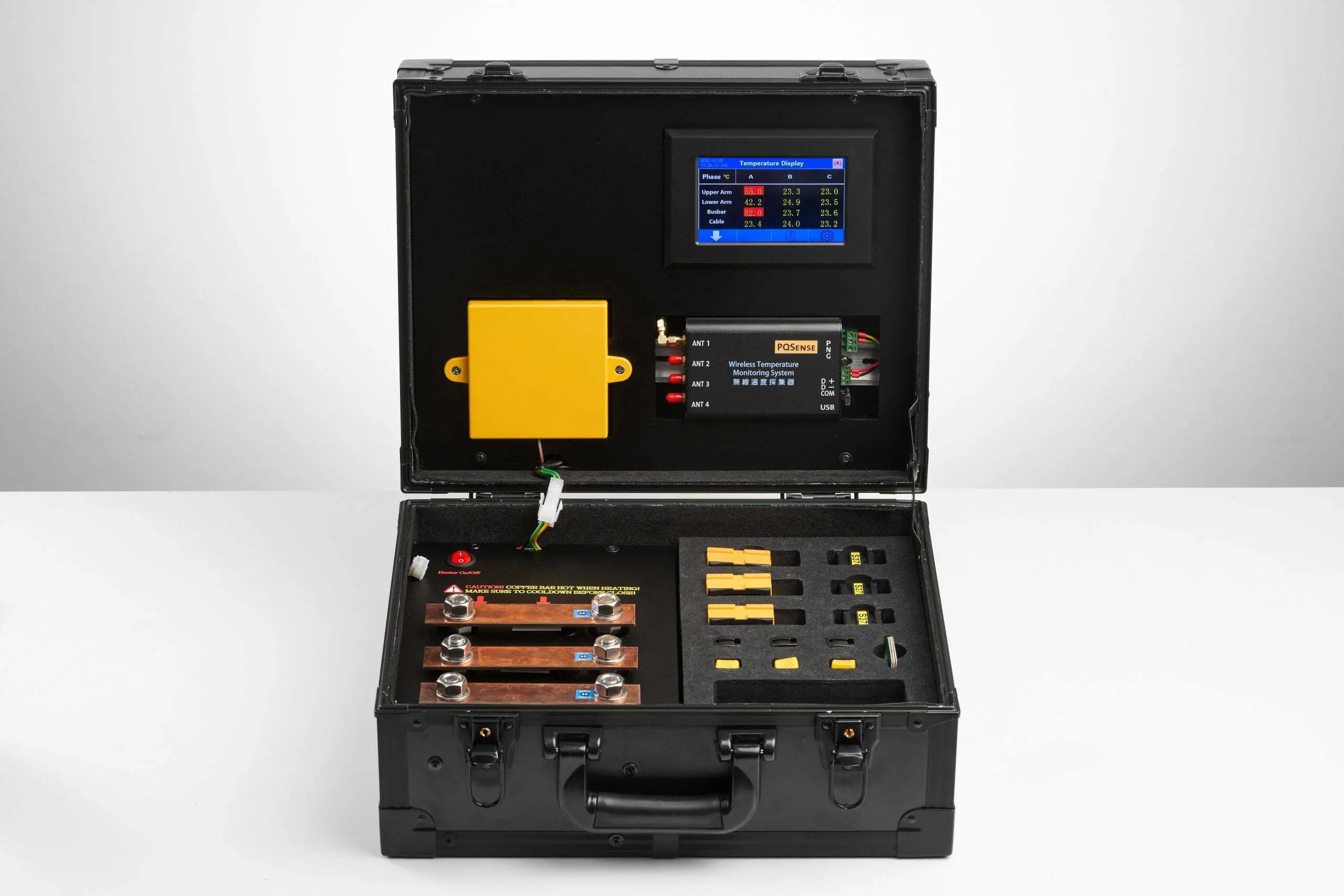
PQSense passive RFID temperature monitoring is deployed across 14,000+ installations globally — semiconductor fabs, power utilities, petrochemical plants, data centers, and rail systems. We offer on-site evaluations to help you assess which panels need continuous monitoring and which approach fits your facility.