









How a Semiconductor Leader Deployed 750+ Battery-Free Monitoring Systems
What drives a semiconductor company to deploy 750+ temperature monitoring systems across multiple facilities? Production that cannot afford to stop.
AI chips are reshaping the global supply chain. The facilities that package them have become some of the most critical production assets on the planet. When demand at this scale meets production that cannot stop, protecting the electrical infrastructure powering those lines is no longer optional — it’s a prerequisite.
The Challenge: Protecting High-Value Production
Advanced semiconductor packaging — particularly COWOS (Chip on Wafer on Substrate) technology used in high-end AI processors — requires uninterrupted power delivery. A single switchgear failure can halt production lines worth millions per hour.
The electrical infrastructure powering these facilities faces specific challenges:
- High utilization rates — equipment runs near capacity around the clock
- Dense electrical environments — compact panel layouts with limited access for manual inspections
- Zero tolerance for unplanned downtime — every hour of lost production carries enormous cost
- Rapid capacity expansion — new lines and facilities coming online continuously as AI demand surges
Traditional monitoring approaches — annual infrared surveys, battery-powered sensors, periodic manual checks — couldn’t provide the continuous visibility this environment demands.
The Evaluation: Every Option Tested
Before standardizing on a solution, the company evaluated every available approach to continuous thermal monitoring for switchgear:
| Technology | Result | Limitation |
|---|---|---|
| Wired sensors (thermocouples) | Rejected | Cables create insulation clearance violations in MV panels; impractical for retrofit |
| Infrared cameras | Rejected for continuous use | Cannot see through insulation boots; requires panel doors open (arc flash risk) |
| SAW-based passive sensors | Evaluated | Reliability gaps in high-density electrical environments |
| Battery-powered wireless | Rejected | Batteries degrade above 60°C; replacement requires shutdown and arc flash PPE |
| PQSense passive RFID | Selected | None identified for this application |
The battery-free RFID approach eliminated every constraint the other technologies faced: no batteries to replace, no wires to route, no maintenance burden, and reliable operation in the high-temperature environments inside switchgear panels.
The Deployment: From Pilot to Standard
The adoption followed a pattern we see in organizations that take electrical safety seriously:
- Pilot phase — Initial deployment on highest-risk panels (main incoming feeders, bus-tie breakers)
- Validation — System proven reliable in the specific electrical environment
- Standardization — Battery-free RFID adopted as the continuous thermal monitoring standard
- Scale-out — Deployed across all critical switchgear in existing facilities
- Built-in — Every new switchgear panel now ships with monitoring pre-installed
Today: 750+ systems across multiple facilities. Not as an option. As a requirement.
What the System Monitors
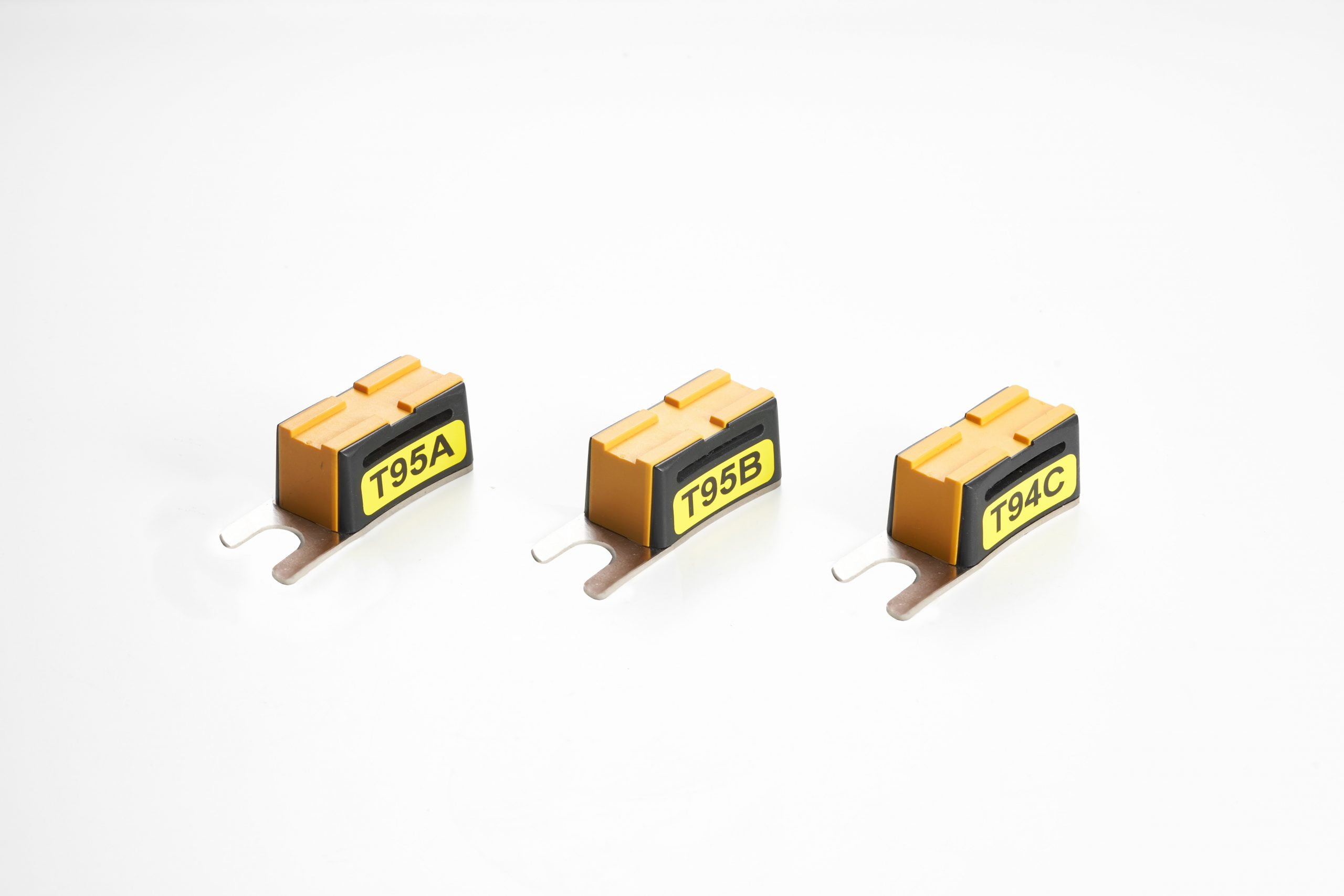
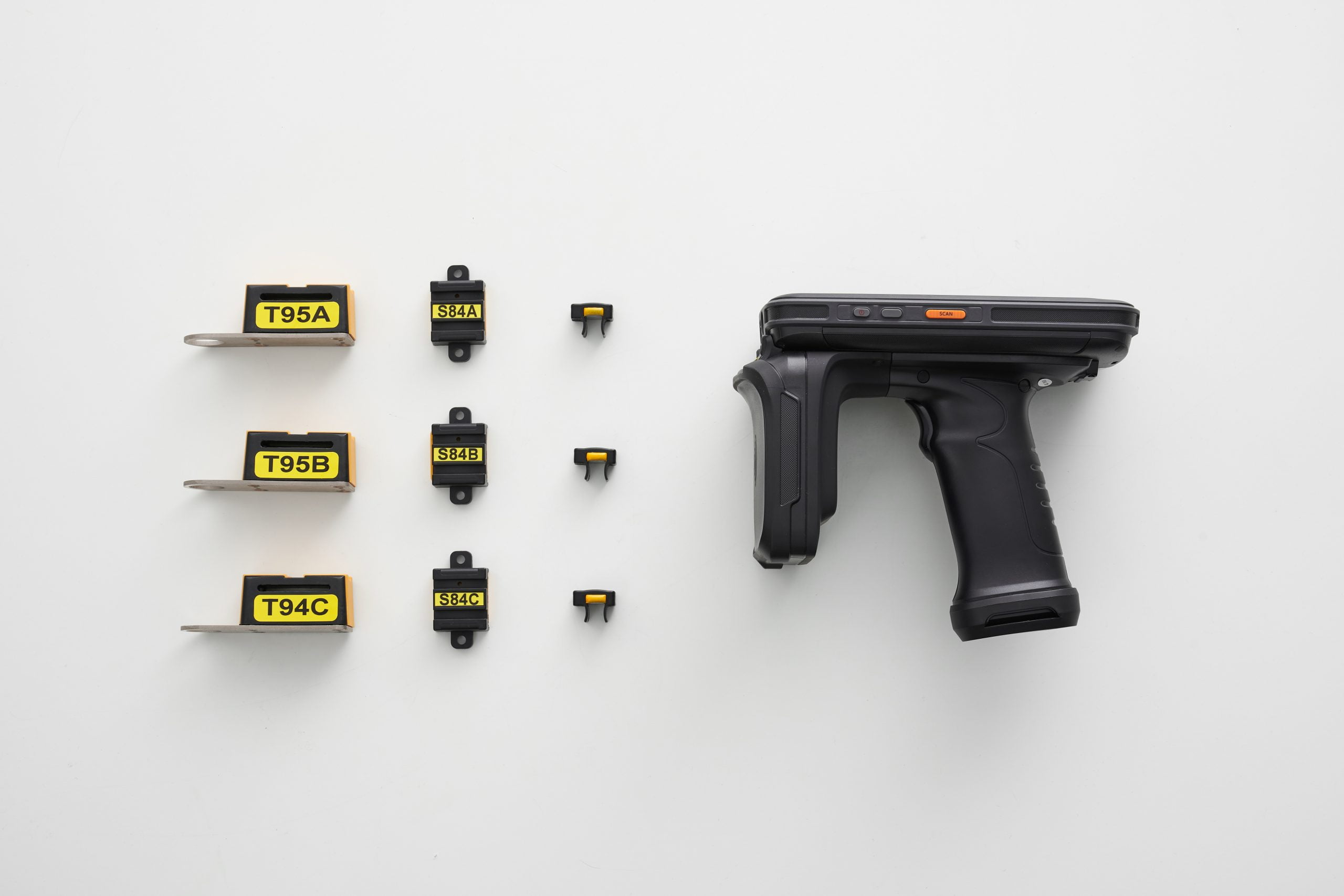
Each switchgear panel is fitted with 6 to 9 passive RFID temperature sensors at critical connection points:
- Busbar joints — where busbars connect between panels
- Breaker jaws — the contact points where circuit breakers engage
- Cable terminations — incoming and outgoing power cable connections
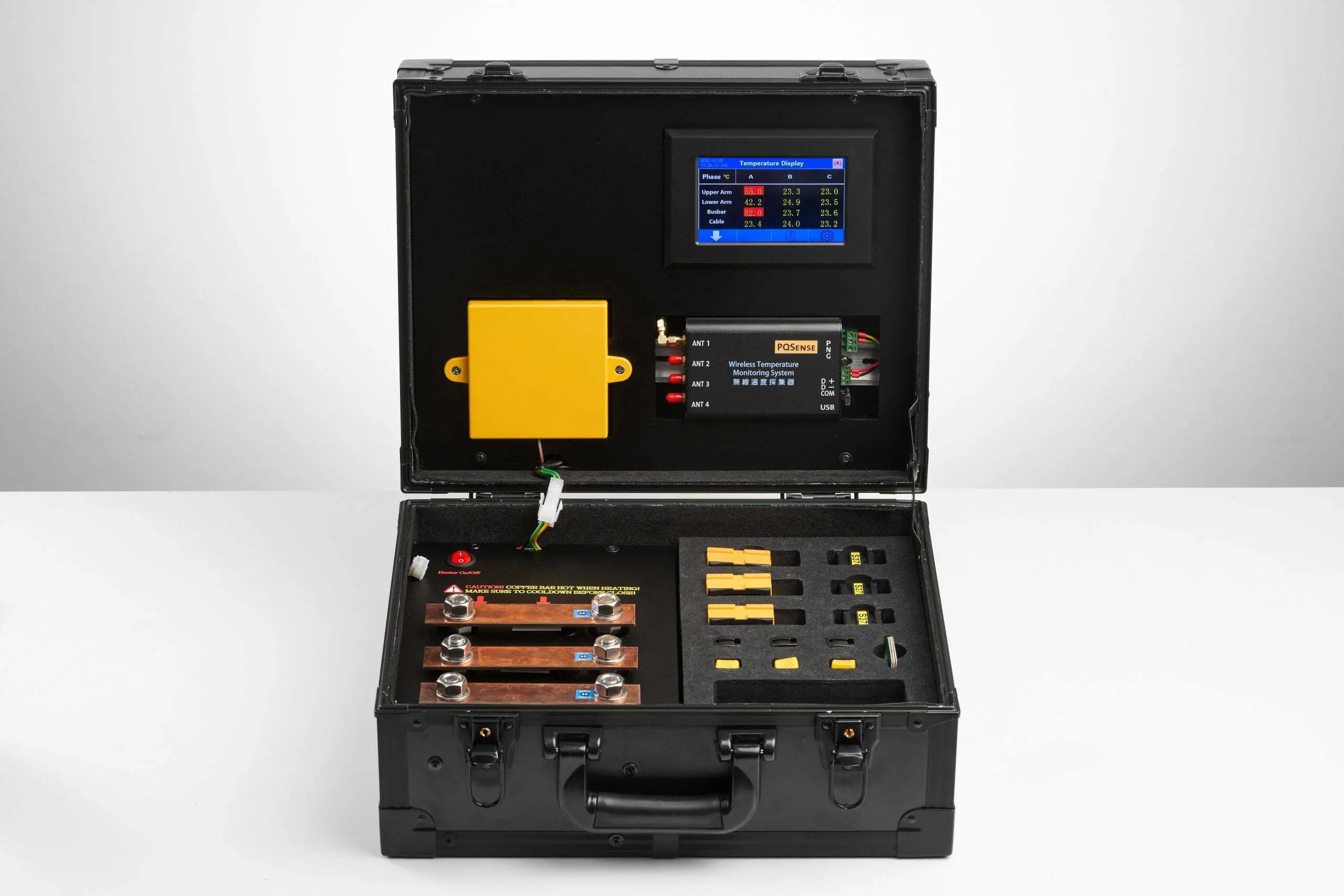
A fixed reader with compact antennas polls all sensors continuously, feeding real-time temperature data into the facility’s SCADA system via Modbus RTU. Any temperature anomaly triggers an immediate alert — giving maintenance teams hours or days of advance warning before a fault becomes critical.
System Specifications
| Parameter | Value |
|---|---|
| Sensor accuracy | ±2°C |
| Temperature range | -20°C to +125°C |
| Power source | None (passive RFID — harvests RF energy) |
| Sensors per panel | 6–9 (typical) |
| Read range | 0.8–3 m |
| Communication | RS485 / Modbus RTU to SCADA |
| Battery replacement | Never |
| Installation time | ~30 minutes per panel during scheduled outage |
Why This Matters Beyond Semiconductor
The same logic that drove this deployment applies everywhere production is scaling:
- Petrochemical plants scaling output — continuous process operations where electrical failure means emergency shutdown
- Data centers expanding capacity — protecting the electrical backbone of cloud and AI infrastructure
- Manufacturing lines running at higher utilization — automotive, steel, paper, cement with aging electrical systems
- Power utilities managing grid reliability — substations and distribution networks serving millions
When production demands go up, the standard for protecting those assets has to go up with it. This semiconductor company answered the question with 750+ systems.
The Industry Is Moving
In November 2025, IEEE approved IEEE 2969 — the first formal guide for continuous thermal monitoring of switchgear. The guide covers sensor placement, alarm thresholds, and six recognized monitoring technologies. Among them, passive RFID stands out for its zero-maintenance, battery-free operation.
What was once an early-adopter decision is becoming an industry standard. PQSense has deployed 14,000+ systems globally — across semiconductor, petrochemical, utilities, manufacturing, and transportation.
Start With an Evaluation
Most facilities begin with their most critical panels. PQSense conducts on-site evaluations anywhere in the world — a walkthrough of your electrical infrastructure, a technology demonstration, and an honest assessment of where continuous thermal monitoring would make a difference.
The evaluation costs nothing but time.